LED Screen Rental Toronto — Factory-Direct Cabinets for Canadian Fleets

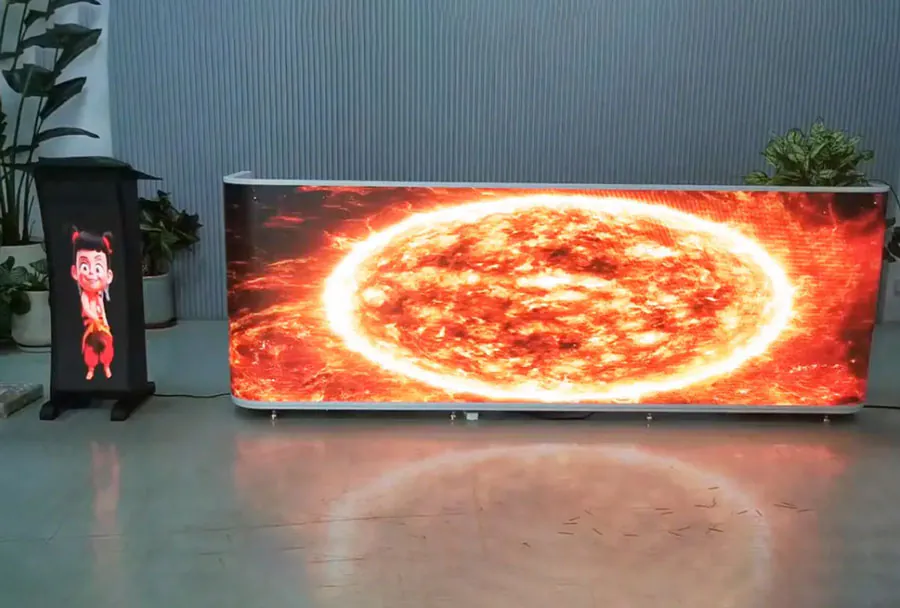
LED screen rental Toronto companies buy from a manufacturer is a cross-border purchase before it is a screen decision: the certification mark on the nameplate, the voltage inside the cabinet, and the customs paperwork behind the pallet all have to be right for Canada before anyone argues about pixel pitch. Get those three wrong, and the wall can arrive, clear, and still be unusable on the show floor.
TW VISION manufactures rental-grade LED cabinets and holds standard stock in our Atlanta warehouse, which ships to Canada as well as the lower 48. We have no Canadian depot, and we do not rent screens in Toronto. What we supply is hardware, spares, processors, and configuration files to the rental houses, AV companies, venues, and exhibitors that do.
What Toronto changes. Ontario wants certified equipment and 120/208V supply, so cabinets are configured at the factory rather than on arrival. Everything crosses a border, which means a broker, a classification and HST at the point of entry. The working season runs from roughly May to October outdoors and indoors the rest of the year, so one fleet has to serve snow, salt and a July festival stage. And the GTA’s arena and convention work runs on union calls, which changes crew cost long before it changes the screen.

Table of Contents
- 1. What Toronto Changes About the Purchase
- 2. Read the Venue, Not the Brochure
- 3. Voltage, Certification and Who Signs Off
- 4. Importing Into Canada Without Surprises
- 5. What Toronto Buyers Order From Us
- 6. Trailer, Truck or Modular: Three Ways to a GTA Site
- 7. What Rental Prices Look Like in Toronto
- 8. Venues and Load-In Across the GTA
- 9. Permits, Fire Safety and Rigging Approvals
- 10. Snow, Salt and Condensation
- 11. Crew, Build Times and Show Day
- 12. Factory Supply Compared With a Supported Rental
- 13. When a Toronto Fleet Buys Instead of Renting
- 14. What We Do Not Provide
- 15. FAQ
- 16. Conclusion
1. What Toronto Changes About the Purchase
Three technical conditions separate a Toronto order from a US order, and none of them is the panel quality.
Certification and voltage. Ontario expects equipment to carry a recognized certification mark — CSA or cUL — and the supply in most Toronto buildings is 120/208V, with 347/600V appearing in some commercial and industrial sites. A cabinet built only for 220–240V at 50Hz is the wrong product for this market.
Customs. Every order crosses at a land border or a port of entry, so the shipment needs a commercial invoice, a classification the broker agrees with, and HST paid or accounted for at the border. That is a predictable process when the paperwork is right and a stall when it is not.
Season. The outdoor calendar runs from about May to October; the rest of the year the work is indoors. A Toronto fleet is therefore bought for both, and the storage routine between them is part of the purchase, not an afterthought.
The fourth condition is labour. Arena, convention centre and major theatre work in Toronto often runs on IATSE Local 58 calls with minimum hours and overtime rules, so build time is a budget line rather than a detail.
None of that changes what a good cabinet is. It changes what has to be specified before the order leaves the factory.
2. Read the Venue, Not the Brochure
Screen size and pitch come from three numbers: the closest viewer, the content people must read, and the light on the wall. Room area comes last, and in the GTA it is usually the least useful number in the brief.
A rule of thumb Toronto rental houses use is roughly one metre of viewing distance for every one to two millimetres of pitch. At three metres, a P2.6 wall is comfortable; at thirty metres, a P6.7 wall reads the same at a fraction of the cost. Buying the finer pitch “in case” is the most common way a first fleet overspends.
Pixel density scales with the square of pitch: (1,000 ÷ pitch)². P2.6 carries about 147,900 pixels per square metre, P3.9 about 65,700 and P4.8 about 43,400. The same 16-foot 16:9 wall is about 9 feet high and 144 square feet of surface at any pitch, which is why area and resolution have to be quoted together.
Working ranges for the region: P1.9–P2.6 for boardrooms, breakout rooms and camera close-ups; P2.9–P3.9 for hotel ballrooms, convention halls and mid-size stages; P4.8–P6.7 for festival stages and public squares once the nearest viewer passes 25 metres; P8–P10 for roadside and stadium-distance work.
Brightness follows the light, not the spec sheet. Indoor rooms run 800–2,500 nits; outdoor walls need 5,000 or more, and 6,000–8,000 where the face takes direct afternoon sun. Ask for calibrated operating brightness, because a 6,000-nit panel does not deliver 6,000 nits at 40°C internal temperature.
3. Voltage, Certification and Who Signs Off
Power is where an LED screen rental Toronto order fails quietly. A screen that runs perfectly in Atlanta can trip a Toronto circuit on the first test, and the fault is in the configuration rather than the product.
The two supplies. Most Toronto commercial buildings provide 120/208V three-phase, which gives 208V between phases and 120V to neutral. Some larger commercial and industrial sites distribute 347/600V. Cabinets, distribution and processor power supplies should be ordered against the site’s actual supply, and the site survey should record the panel, the breaker rating and the distance to the wall.
Certification. Equipment used in Ontario should carry a recognized certification mark, and the nameplate should match what is in the quotation. Ask for the certificate for the exact model, not for the series.
Temporary electrical work. The Electrical Safety Authority (ESA) is the body that oversees electrical safety in Ontario, and temporary installations — distribution, tie-ins, generators — are usually handled by a licensed electrical contractor who files the notification. Confirm early who owns that filing, because it sits with the local electrician, not the cabinet supplier.
Generator and grounding. Outdoor builds need a generator sized on maximum draw, not average, plus grounding, GFCI protection where required and a distribution plan that keeps cable runs off public walkways. Audio and video grounding should be agreed before the first hum appears.
Who signs off. Structural design for elevated or ground-supported walls belongs to an Ontario licensed professional engineer. Our documentation supports that review; it does not replace it.
4. Importing Into Canada Without Surprises
Importing is routine when it is planned and expensive when it is improvised. Five items decide whether the shipment moves.
Broker. The importer appoints a customs broker; we do not act as one. The broker needs the commercial invoice, packing list, bill of lading or waybill and the product documentation before the truck reaches the border.
Classification. LED display panels are typically classified under HS 8531.20, but the code depends on how the goods are described and declared. Your broker confirms it, and a correction after release costs more than a question before shipping.
Origin and duty. Duty depends on where the goods originate, not where they ship from. Goods of US origin may qualify for preferential treatment under CUSMA with a certification of origin; goods of other origin are assessed at the applicable tariff. Do not let a quote assume zero duty without the origin documentation behind it.
Tax. Ontario’s HST is 13% and is generally paid or accounted for at the point of import. A GST/HST-registered business normally recovers the tax as an input credit, so the cost is cash flow rather than margin — but only if the invoice and the declaration agree.
Delivery. Clearance happens at the border, delivery happens at your dock or the venue. Plan the two separately, especially for a show date, and keep the arrival appointment inside the venue’s load-in window.
For a first order, a pre-shipment inspection with photographs and a powered test is cheaper than discovering a paperwork or batch problem at the border.
5. What Toronto Buyers Order From Us
LED screen rental Toronto orders fall into four groups: fine-pitch indoor cabinets, standard rental cabinets, IP-rated outdoor cabinets, and folding posters for lobbies and retail.
Fine-pitch indoor cabinets
P1.953 and P2.604 suit boardrooms, broadcast and streaming sets, and stages where the front row sits inside four metres. Agencies, banks, hospital foundations and tech offices downtown ask for fine pitch because content is read close up or filmed.
Standard rental cabinets
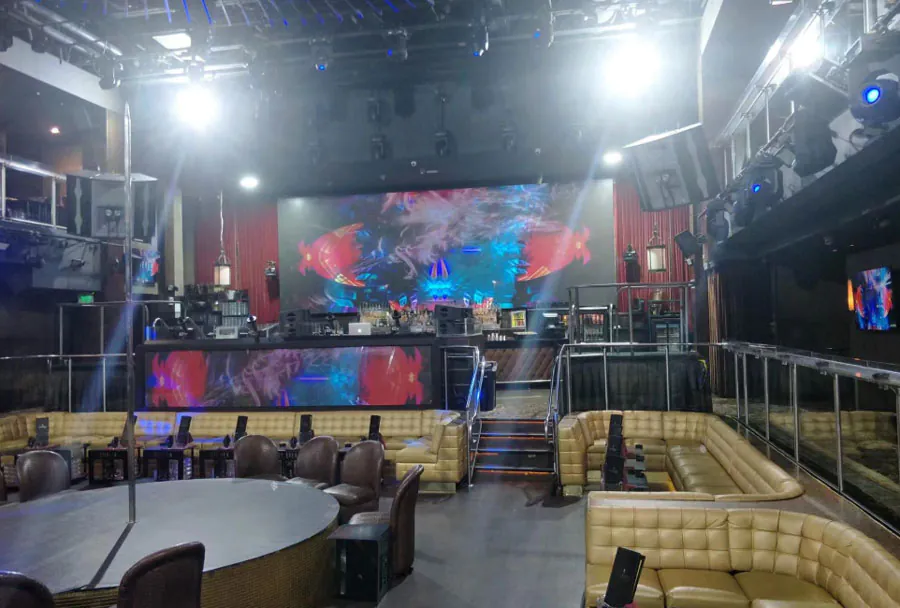
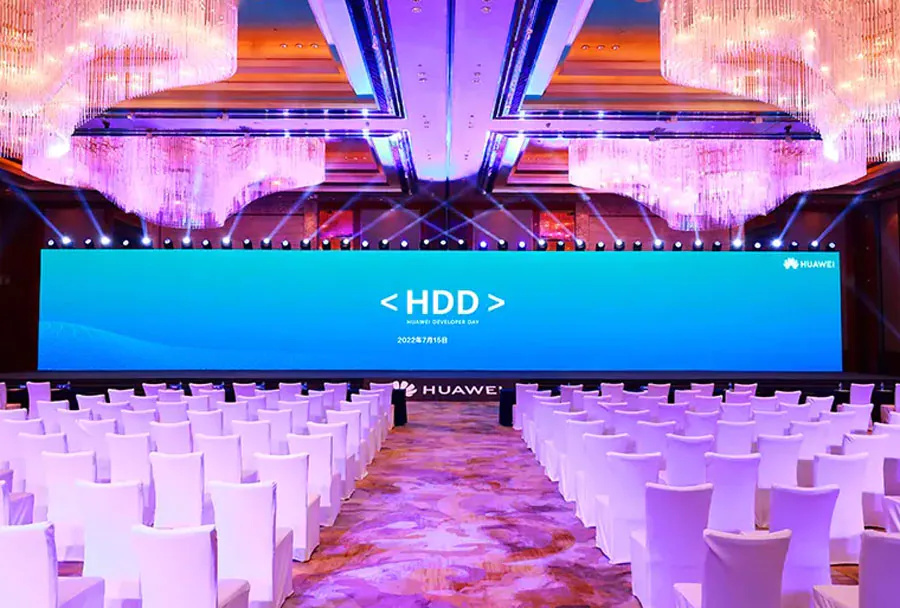
P2.976 and P3.91 in 500×500 mm and 500×1000 mm formats carry general sessions, trade show booths, awards nights and hotel ballrooms, with front or rear service access and optional curved locks.
Outdoor cabinets
P3.91 and P4.81 with IP-rated sealing and brightness headroom. Rain, wind and road salt are the operating conditions, so enclosure design and drainage matter as much as nits.
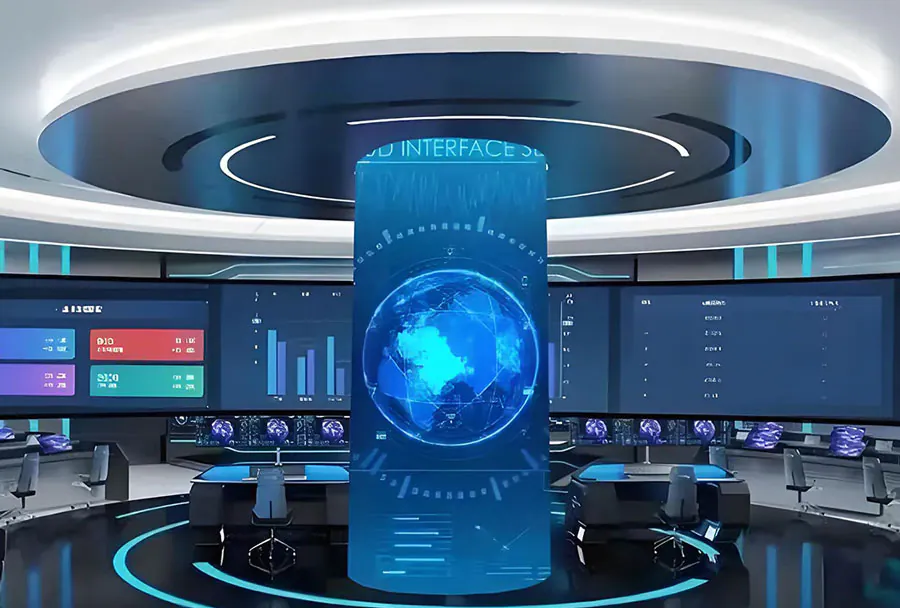
| Series | Stock | Pixel pitch | Cabinet | Typical Toronto use |
|---|---|---|---|---|
| PQ P2.6 | Atlanta stock | P2.6 | 500×500 / 500×1000 mm | Rental walls, corporate stages, ballrooms |
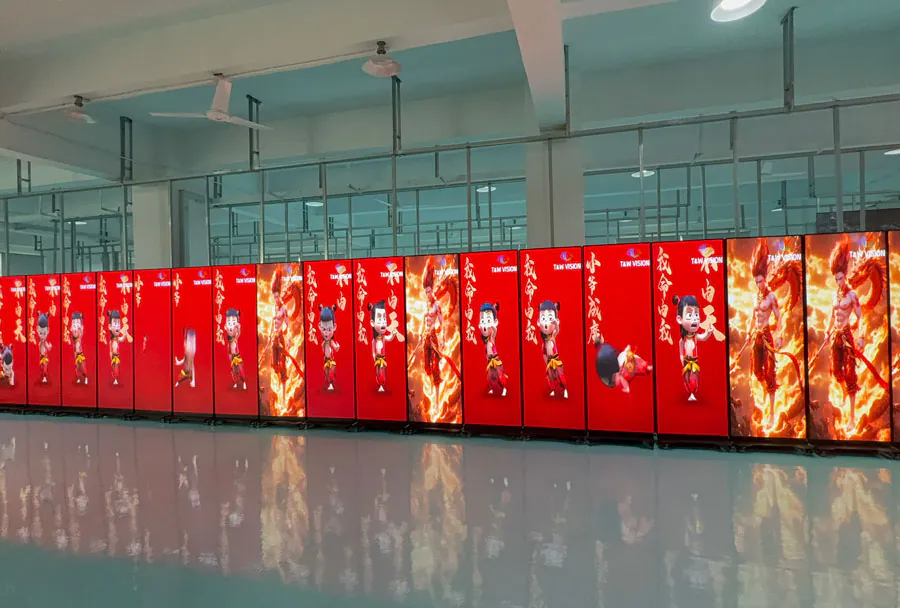
| LP-H | Atlanta stock | P1.86 | 640×1920 mm folding poster | Hotel lobbies, retail, church foyers |
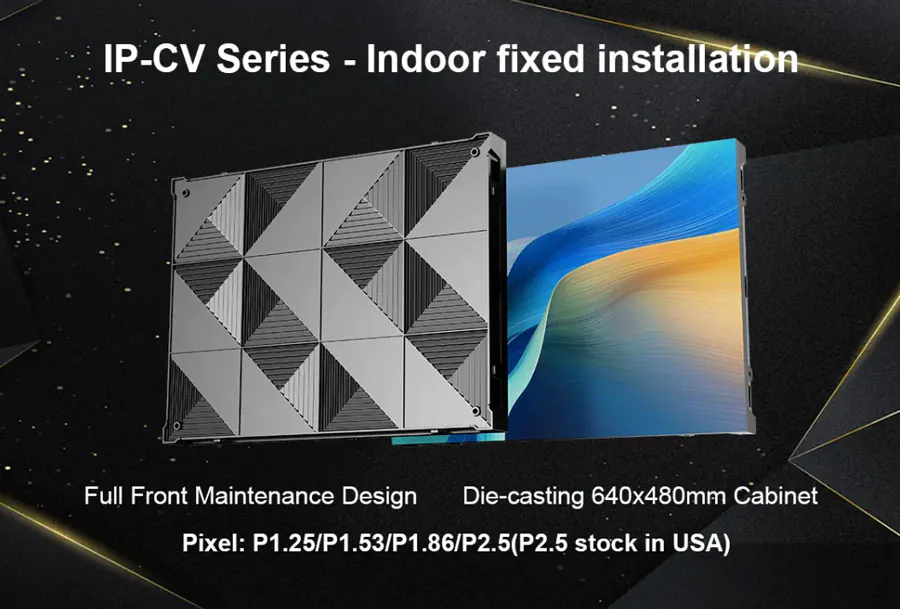
| IP-CT | Atlanta stock | P2.5 | 640×480 mm soft connection | Church walls, menu boards, fixed installs |
| Other pitches (PN / PH / PI) | Factory order | P1.953 – P6.67 | 500×500 / 500×1000 mm | 15–20 days production plus freight |
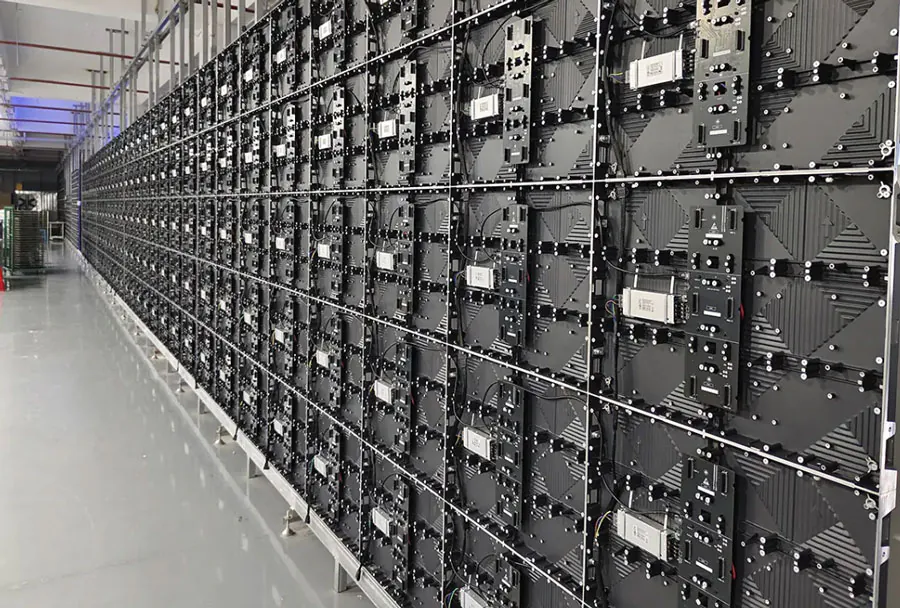
Orders ship from a single production batch with matched spare modules, receiving cards, power supplies, processors, flight cases and configuration files. Batch matching matters more than buyers expect: a replacement module from a different run shows as a patch on camera, and in a rental fleet that patch follows the screen from job to job.
6. Trailer, Truck or Modular: Three Ways to a GTA Site
Toronto’s street festivals, park screenings and plaza activations often cannot take a built wall. Three formats solve that, and each carries its own cost profile.
Trailer-mounted. An LED cabinet array on a towable trailer, usually with a hydraulic mast that lifts the screen to viewing height. Deployment runs from about one to four hours, the unit can be self-powered with an onboard generator, and it is the best balance of cost, speed and outdoor performance. A 12 × 7 ft trailer screen at P6–P8 with basic audio is the common entry point.
Truck-mounted. The same idea on a vehicle chassis. More flexible for multi-stop tours, but road permits, driver hours and parking rules add cost and paperwork.
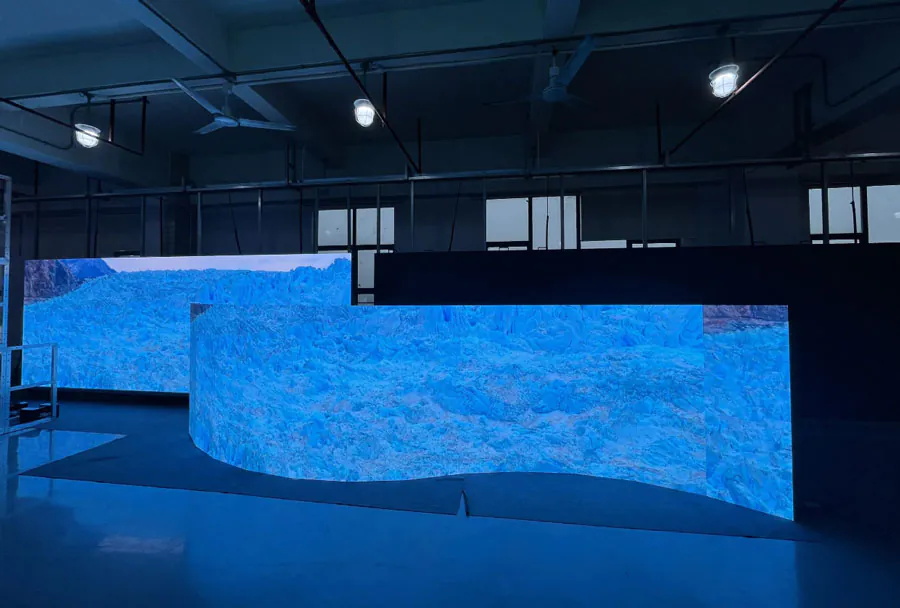
Modular ground-supported. Cabinets on a truss or ground support with ballast. Slower to build than a trailer but gives full control of size, aspect ratio and pitch, and it is the only option when the wall has to match a stage design.
Two checks before booking any of them. Confirm the power arrangement — self-powered trailer, house supply or separate generator — because fuel is often passed through as a daily charge. And confirm who handles traffic control and road occupancy if the unit sits on a street, since that approval is not the vendor’s to grant.
For a wall that has to be seen from 50–100 feet, a coarser pitch on a trailer is both cheaper and clearer than a fine-pitch panel starved of brightness in daylight.
7. What Rental Prices Look Like in Toronto
The LED screen rental Toronto rates below are indicative market figures in Canadian dollars for a locally supplied screen. They are a benchmark for comparing bids, not our factory price.
| Use case | Typical size | Pitch | Indicative rate |
|---|---|---|---|
| Community screening or small event | 10 × 6 ft trailer unit | P6 – P8 | CAD 900–2,000 per day |
| Corporate launch, downtown, two days | 14 × 8 ft indoor | P2.6 – P3.9 | CAD 3,500 per day package, ~12,000–15,000 all-in |
| Festival backdrop | 12 × 6 m outdoor | P8 – P12 | CAD 8,000–20,000 per day with installation |
| Stadium-grade wall | 20 m+ outdoor | P6 – P10 | CAD 25,000–60,000 per day |
Delivery is quoted separately: roughly CAD 100–500 for a short run and 500–1,500 for a long haul or a multi-stop tour. Generator fuel runs 50–300 per day on self-powered units. Permit support is often 100–1,500 depending on footprint and road use, and event insurance add-ons 150–600. HST at 13% applies on top.
A worked example from a Toronto price sheet: a one-evening community film night on a 10 × 6 ft unit lands near CAD 1,900–2,300 once base rental, delivery, a technician and a permit are added. A two-day downtown corporate launch with content preparation and permits lands near 12,000–15,000.
Ask for the quote itemised — base rental, delivery, setup, technician hours, fuel, permits, content, HST, insurance — because bundled packages hide the two lines that move most: crew hours and permits.
8. Venues and Load-In Across the GTA
Toronto venues differ more than their seating charts suggest, and the difference decides crew size and build hours.
Metro Toronto Convention Centre. Modern docks and freight lifts, but booked tightly and split across north and south buildings. Confirm which hall and which dock before quoting labour.
Scotiabank Arena and Rogers Centre. House rigging plots, load limits and union crews. A flown wall follows the venue’s engineering approval and the show’s truck marshalling plan.
Meridian Hall, Massey Hall and Roy Thomson Hall. Heritage buildings with narrow loading doors, low grids and protected interiors. Rigging has to be minimally invasive and build windows are short.
Enercare Centre and Exhibition Place. Large flat-floor halls with vehicle access, which suits trailer and truck-mounted units as well as built walls.
Outdoor sites. Budweiser Stage and Ontario Place, Downsview Park, Yonge-Dundas Square and Nathan Phillips Square are ground-supported builds with wind, ballast, public-safety and noise questions — and no place to hang anything.
Hotels and offices. Downtown properties usually have one service elevator, a low ballroom ceiling and a hard load-out curfew.
Two practical notes. Downtown delivery is a scheduling problem: a 7 am drop on King Street is a different job from a 1 am load-in, and the crew cost reflects it. And a venue’s technical package is worth more than a phone call — ask for the rigging plot, dock dimensions and power availability in writing before the site survey.
9. Permits, Fire Safety and Rigging Approvals
Approvals are the item that cannot be compressed on the day, and in Toronto they start earlier than most first-time buyers expect.
City event permits. Events using streets, sidewalks, parks or plazas need City of Toronto approval, and most applications require several weeks. Screen placement, footprint and duration all feed the application.
Road occupancy. A trailer or truck-mounted unit on a street, or anything that affects traffic flow, involves Toronto Transportation Services and often a traffic control plan.
Signs and temporary structures. Sign bylaws apply to some street-facing placements, and temporary structures fall under building review. Large modular walls and elevated platforms generally need design by an Ontario professional engineer.
Fire and life safety. Toronto Fire Services reviews assemblies for egress, occupancy and materials. Cable ramps, clear exit paths and a continuous emergency access lane are conditions of approval, not suggestions.
Labour. Venues with collective agreements require IATSE Local 58 stagehands for rigging and sometimes for load-in. Budget minimum calls and overtime, and confirm who pays them.
Insurance. Venues commonly ask for a certificate of insurance naming them as additional insured, with liability limits of two million dollars or more. Vendors should supply their own certificate; the event’s coverage is a separate line.
Start the paperwork when the date is confirmed. A permit filed three weeks out is a permit that decides the build.
10. Snow, Salt and Condensation
Toronto is not a cold-weather problem so much as a moisture problem with salt attached.
Condensation. A cabinet that sat in a truck at −15°C and opens into a warm ballroom forms moisture on cold modules and connectors. Acclimatise crates in the receiving space for roughly 24 hours, keep them closed while they warm, and inspect before powering. This is the single most common cause of a first-day fault in a winter install.
Road salt. Salt spray reaches cases, cables and connector shells on any winter road move. Rinse and dry cases after transport, and keep connector caps on until the build starts.
Outdoor season. From May to October, the risks are wind, sudden showers and hail. Outdoor builds need a stated wind rating, engineered ballast and a written storm-call trigger — who decides to strike, and by when.
Rain on the face. IP65 handles it. Sealed connectors, drip loops and drainage behind the wall matter more than the rating itself, and a cabinet standing in pooled water at its base fails regardless of IP.
Storage between seasons. Dry, heated, off the floor and away from exterior walls. A wall stored in an unheated unit for six months will need a full inspection before its first spring show.
Heat. July builds still derate. Leave ventilation clearance behind the wall and log cabinet temperature through the afternoon.
11. Crew, Build Times and Show Day
Build time is a function of area, height, structure and venue rules, not of the panel. Useful planning bands for a Toronto job:
- Small indoor wall, 3 × 2 m: 2–4 hours with two technicians.
- Ballroom stage, 6 × 3 m on truss: 4–8 hours with four to six.
- Convention booth with a hung header: 3–6 hours inside a booked build window.
- Outdoor festival wall, 10 × 5 m ground-supported: 10–24 hours including ballast, safety checks and camera alignment.
Crew size follows the same logic: two people for a booth screen, four to six for a ballroom, six to eight plus riggers for an arena or festival build. Technician rates in the Toronto market run roughly CAD 65–150 per hour depending on certification and hours, and union calls carry minimums.
Show day should follow a fixed sequence: power confirmed, wall powered and tested, sources switched, calibration checked, then a ten-minute loop at show brightness signed off by the client. Test with the actual camera shutter if the event is filmed; a wall that looks clean to the eye can band on a feed.
Keep spares on site — modules, receiving cards, a power supply and a backup processor. A spare in a warehouse across the city is not a spare.
Two add-ons worth pricing before the show rather than during it: a technician on site through overnight hours for multi-day builds, and a short operator training session with a maintenance checklist for the client’s own staff.
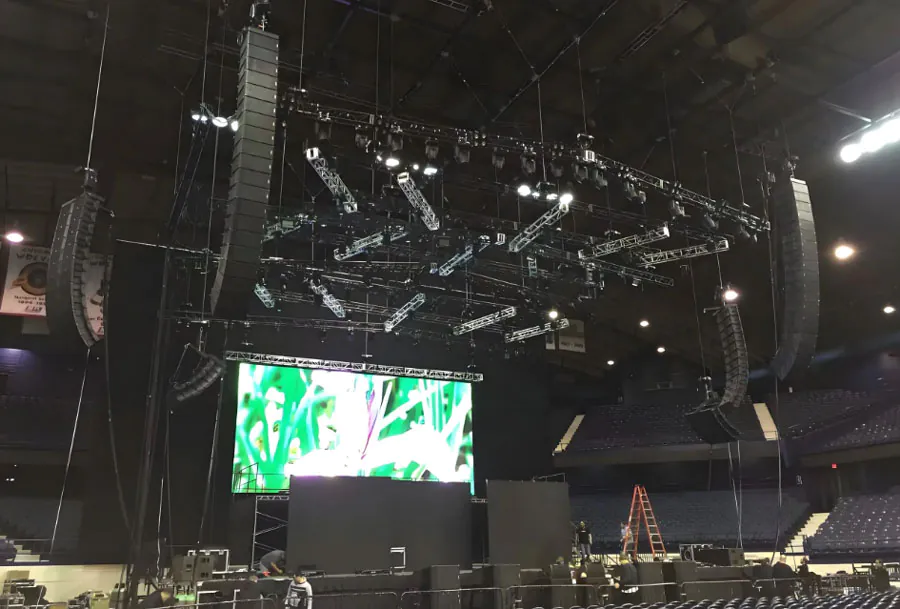
12. Factory Supply Compared With a Supported Rental
For an LED screen rental Toronto buyer, factory pricing and event-ready rental pricing describe different scopes. Compare total delivered responsibility, not equipment price.
| Quote element | Factory supply | Supported rental | What to check |
|---|---|---|---|
| Cabinets | Included | Included | Model, batch and certification mark |
| Structure | Usually separate | Often available | Engineering stamp and wind rating |
| Processor | Optional | Usually included | Inputs, scaling, backup |
| Freight and clearance | Buyer or quoted | Included locally | Broker, duty, HST treatment |
| Labour | Buyer arranged | Quoted locally | Union minimums and overtime |
| Spares | Purchased | Provider inventory | Quantity held on site |
A factory order suits a company with trained technicians, compatible rigging, dry storage and enough bookings to keep the fleet working. A supported rental suits a one-weekend show where the crew, the permits and the insurance are the hard part.
Normalise every proposal into the same scope: freight, clearance, drayage, lift equipment, power, setup, rehearsal, operator hours, teardown and tax. A common Toronto pattern is a low equipment quote that excludes the processor, the structural review and the union call; add all three and the apparent advantage disappears.
Behind the factory claim. An 8,000㎡ facility with 8 independent SMT lines keeps placement, PCB assembly, module production and calibration in-house. A 500㎡ module aging area screens weak modules, and roughly 2,000㎡ of cabinet aging runs each batch for 24 hours at operating conditions. Modules are glued at the edges and cabinets screwed with torque control. For a Toronto buyer the useful part is the batch record: a wall built in one run keeps its colour and calibration when a module is replaced two seasons later, which is exactly what a mixed indoor-and-outdoor fleet needs.
13. When a Toronto Fleet Buys Instead of Renting
Owning beats renting when the same configuration is used repeatedly and the supporting costs are already paid for. The calculation has three steps.
Add the purchase total: cabinets, structure, processing, freight, clearance, duty, HST treatment, spares and cases. Add the effective cost of renting the same configuration per event, including crew, permits and transport. Divide the first by the second.
An illustrative case: a 30 m² P3.9 indoor fleet at roughly CAD 75,000 landed, against CAD 4,500 per event to rent an equivalent wall with crew and delivery. At eight bookings a year, renting costs about CAD 36,000 annually, so ownership pays back in a little over two years — before counting resale or the extra bookings a fleet of your own makes possible.
Two Toronto factors the arithmetic misses. Availability tightens from May to October, when every trailer and outdoor cabinet in the province is booked, and again through the November conference season. And control matters: owning the batch means the spares, calibration files and maintenance history are yours when a client books a wall six weeks out.
Build low, expected and high usage cases, and include a year with fewer events than planned. If the wall would sit idle for two winters, renting is the better answer.
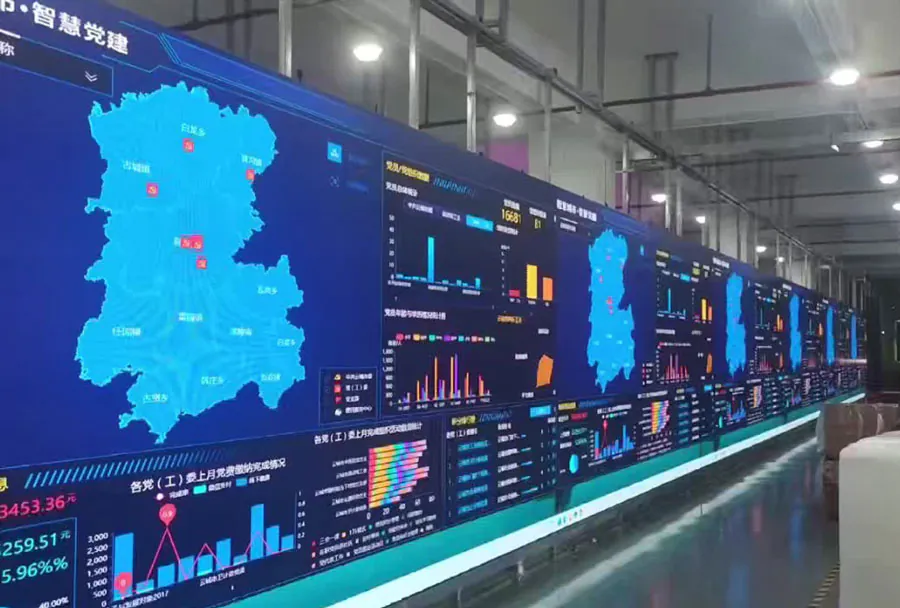
14. What We Do Not Provide
We provide: cabinets and modules, matched spares, processors and control components, flight cases, configuration files, export and certification documentation, and technical support for the equipment we sell.
We do not provide: Canadian rental, installation crews, riggers, generators, customs brokerage, permits, structural engineering stamps or event insurance. Those come from a Toronto production partner, an Ontario engineer and your broker — and section 9 is the scope to require from them.
If you need a screen for one evening, a Toronto rental company is the correct call. If you are building a fleet or replacing an aging batch, the conversation starts with pitch, quantity, destination voltage and lead time.
15. FAQ
Do you rent LED screens in Toronto?
No. We manufacture and sell rental-grade cabinets. For a single event, a Toronto rental company is the right call; this page covers buying cabinets to build or extend a fleet.
What voltage do Toronto venues use?
Most commercial buildings supply 120/208V three-phase, and some larger sites distribute 347/600V. Confirm the panel at the site survey and order the cabinet configuration against it.
Will the equipment clear Canadian customs?
Yes, with the right paperwork: commercial invoice, packing list, waybill and product documentation to your broker. Classification and duty depend on origin, and HST applies at import.
How long does delivery to Toronto take?
Stock lines ship from Atlanta and typically reach the GTA in three to six business days once loaded, with clearance time added for a first shipment. Confirm the window at quotation for a fixed show date.
Can an outdoor cabinet be used indoors?
It can, but it is heavier, sealed and usually brighter than the room needs. The reverse — an indoor panel on an outdoor stage — does not work in daylight or in rain.
Do you supply spares from the same batch?
Yes. Matched modules, receiving cards and power supplies are quoted with the order rather than sourced later, which is what keeps colour consistent after a repair.
Can you supply a mobile LED screen rental in Toronto?
Practical Considerations
Yes. Trailer-mounted and truck-mounted units are built on the same cabinet lines, with a hydraulic mast and an optional onboard generator. Deployment runs from one to four hours, which suits street festivals, park screenings and plaza activations where a built wall cannot be anchored. See section 6 for the three formats and their cost profiles.
Do you cover outdoor LED screen rental for public gatherings?
Outdoor cabinets at P3.91 and P4.81 with IP-rated sealing are the standard for parks, plazas and festival grounds, and they ship with ballast and wind-rating documentation for the engineer’s review. Permits for city property remain with your Toronto partner.
Is high-resolution or custom LED screen rental available?
Fine pitch from P1.953 upward is available as a factory order, and curved, 90-degree, flexible and 45-degree bevel cabinets are built to the same batch. Custom shapes usually need a dimensioned drawing and a structural review before production.
Can the same fleet cover weddings, concerts and corporate events?
Yes, and most Toronto fleets are bought that way: P2.6 for ballrooms and weddings, P3.9 for conferences, P4.8 or coarser for concert stages. One batch across all three keeps colour and calibration consistent when a module is swapped.
16. Conclusion
LED screen rental Toronto buyers specify well is a cross-border purchase with a local plan attached: certification and voltage set at the factory, paperwork that clears, and a fleet that works in a July park and a February ballroom.
Send cabinet size, pitch, quantity, indoor or outdoor use, destination voltage and the delivery city. We will confirm what is in production, what the freight and clearance window looks like, and which parts of the build belong with your Toronto partner.
For rental rates and package comparisons, see LED screen rental prices in Toronto. For vendor selection, see top rated mobile LED screen rental companies in Toronto.
Cross-border shipments are cleared under CBSA documentation rules. See www.cbsa-asfc.gc.ca for the current rules.
Ontario tax and business requirements are published provincially. See www.ontario.ca for the current rules.