Flexible Outdoor LED Screen Rental Packages (Short & Long Term)

Outdoor LED screens have become an indispensable tool for event producers, advertisers, municipalities, and brands seeking high-impact visual communication. Whether you are staging a one-night concert, a multi-day festival, a seasonal retail activation, or a permanent outdoor advertising installation, flexible rental packages — both short and long term — provide operational agility, cost efficiency, and technical sophistication. This article delivers a comprehensive, professional guide to outdoor LED screen rental packages, covering use cases, technical specifications, pricing frameworks, logistics, risk mitigation, and key decision criteria for choosing the right package for your project.
Why Choose Rental Over Purchase?
Renting outdoor LED screens is often the smarter choice for many organizations due to several clear advantages:
– Cost effectiveness: Purchasing a high-quality LED wall requires substantial upfront capital, ongoing maintenance, and storage costs. Rental converts this CAPEX into predictable OPEX.
– Access to latest technology: Rental fleets are refreshed periodically; you gain access to newer pixel pitches, higher brightness panels, and improved control systems without capital expenditure.
– Scalability and flexibility: Rentals let you scale screen size and resolution to the event’s needs. A brand activation might need a modest screen, while a stadium show needs large-format displays.
– Reduced operational burden: Professional rental providers supply technical support, rigging, and site services.
– Short lead times: When you need a solution quickly, established rental houses can deploy proven systems with minimal planning time.
Short-term vs Long-term Rental: Key Differences
Short-term and long-term rental packages target different requirements and operational models:
Short-term rentals (hours to a few weeks)
– Typical uses: concerts, trade shows, sporting events, political rallies, pop-up activations.
– Priorities: rapid deployment, modular rigs, on-site technical support, and quick teardown.
– Pricing structure: per day or per event; includes delivery, setup, and operator fees.
Long-term rentals (several months to years)
– Typical uses: seasonal retail campaigns, construction site signage, municipal displays, long-running advertising campaigns.
– Priorities: weather durability, power efficiency, theft and vandalism prevention, and remote content management.
– Pricing structure: monthly or annual leasing with maintenance SLA and potentially volume discounts.
Technical Considerations When Choosing a Package
Selecting the right LED screen involves more than size. Consider these technical parameters:
– Pixel pitch: Determines viewing distance and image detail. Smaller pitches (P2.5–P4) are suited to close viewing; larger pitches (P6–P10) are acceptable for distant viewing.
– Brightness: Outdoor screens need high nits (typically 5,000–10,000 cd/m2) for daylight visibility and automatic brightness control for night operations.
– IP rating and environmental ruggedness: For true outdoor use, IP65 or higher protection against dust and water is recommended.
– Refresh rate and grayscale: High refresh rates (≥3840 Hz) reduce flicker for broadcast and camera capture.
– Module and cabinet dimensions: Affects modularity, transportation efficiency, and assembly speed.
– Power consumption and thermal management: Efficient systems lower generator requirements and operating costs.
– Control system and connectivity: Robust content management systems (CMS) with remote monitoring are essential for long-term deployments.
Typical Package Elements
Most reputable rental packages include a combination of the following:
– LED panels and frames
– Video processors and media servers
– Mounting systems: truss, ground supports, crates, or fixed frames
– Cabling, power distribution, and backup power plans
– Transport, setup, and teardown
– On-site technicians and operators
– Weatherproofing and security measures (for long-term)
– Content scheduling and remote CMS access (often optional or premium)
Pricing Models Explained
Understanding pricing models helps you compare quotes effectively:
– Day-rate pricing: Common for short events; transparent but can be high per-unit daily cost.
– Weekly packages: Slightly discounted from day rates; useful for multi-day events.
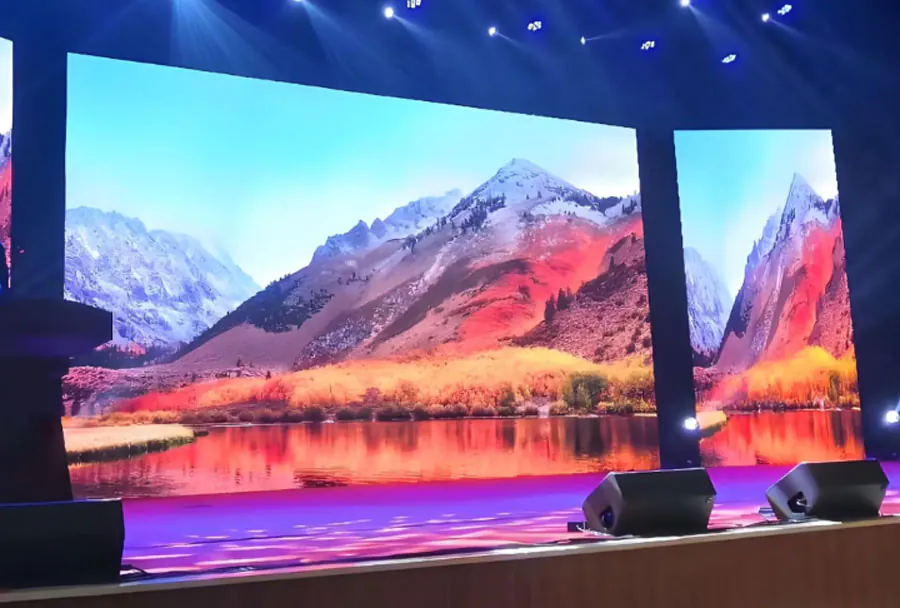
– Monthly/seasonal leasing: Economies of scale come into play; providers amortize setup costs.
– CAPEX-to-OPEX lease-to-own: For organizations that might convert to ownership over time.
– All-inclusive vs à la carte: Determine whether quotes include transport, rigging, insurance, and tech support.
When evaluating quotes, ensure you compare apples to apples: screen size, pixel pitch, brightness, IP rating, included services, and SLA terms.
Analysis Table: Short-Term vs Long-Term Rental Package Comparison
| Package Type | Typical Duration | Ideal Use Cases | Included Services | Estimated Price Range |
|---|---|---|---|---|
| Standard Short-Term | 1 day – 2 weeks | Concerts, trade shows, festivals | Delivery, setup, operator, teardown | $1,500 – $10,000 per day (varies by size) |
| Extended Short-Term | 2 weeks – 3 months | Roadshows, seasonal promotions, short campaigns | Delivery, setup, remote CMS, scheduled maintenance | $5,000 – $30,000 per month |
| Long-Term Rental | 3 months – 2 years | Retail facades, construction hoardings, persistent signage | Full maintenance, remote monitoring, parts replacement | $2,000 – $15,000 per month (depending on system) |
| Managed Long-Term | 6 months – multi-year | Permanent campaigns, municipal displays | Turnkey service: content management, SLA, security | $10,000+ per month (high service level) |
How to Specify Requirements for Accurate Quotes
To receive a reliable quote, be prepared to supply:
– Event dates, load-in and load-out times
– Location specifics (indoor, outdoor, elevation, ground type)
– Desired screen dimensions and aspect ratio
– Expected audience distances and camera capture requirements
– Power availability and onsite infrastructure (generators required?)
– Local regulations or permit constraints
– Content playback sources (live feed, pre-rendered video, multiple inputs)
– Any site access restrictions (curfews, noise limits, neighboring properties)
The more precise your brief, the fewer hidden costs show up later.
Logistics, Permitting, and Site Readiness
Successful deployments depend on practical logistics:
– Site surveys: A formal site survey should verify rigging points, ground bearing capacity, and sightlines.
– Permits: Municipalities often require permits for temporary structures, noise, power draw, and public safety. Allocate time for approvals.
– Ground and access: For outdoor events, consider ground protection mats, vehicle access, and crane or lift availability.
– Power and backup: Calculate total wattage and arrange for generators or on-site power distribution; include UPS for controllers.
– Crowd control: Barriers and security personnel protect equipment and manage audience safety.
– Insurance and liability: Confirm rental provider’s insurance and whether your event insurance must list them as additional insured.
Installation and Operational Best Practices
– Modular design: Use cabinets with standardized connectors to speed up build times.
– Rigging safety: Employ certified riggers and ensure compliance with local safety codes.
– Weather contingency: Have waterproof covers, drainage for elevated platforms, and protocols for high winds or lightning.
– Calibration and color matching: Calibrate multiple cabinets and any additional screens to ensure uniform color and brightness.
– Broadcast-friendly settings: For camera-heavy events, configure refresh rates and shutter settings to avoid flicker and moiré.
– Onsite technician: Keep an experienced LED technician for the duration for live troubleshooting.
– Remote diagnostics: For long-term rentals, enable remote monitoring to detect module failures or power anomalies early.
Content Considerations for Outdoor LED
Content design must account for outdoor viewing characteristics:
– High-contrast visuals and bold typography improve legibility at distance.
– Saturation and brightness need tuning so colors appear natural under high ambient light.
– Motion speed: Fast-scrolling or small text can be illegible; keep motion to moderate levels.
– Aspect ratio and pixel layout: Design media to native screen resolution and aspect ratio to avoid letterboxing or distortion.
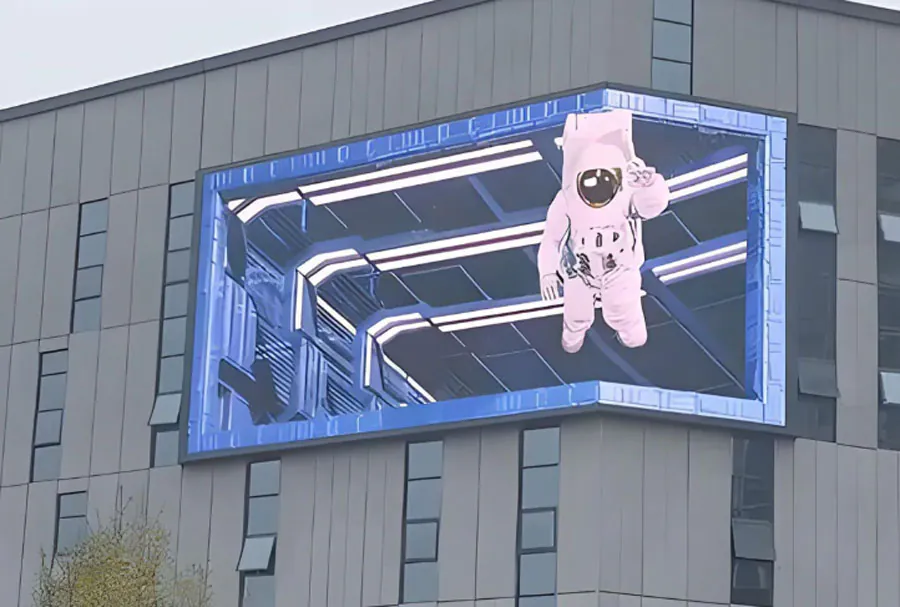
– Dynamic scheduling: Use CMS to tailor content by time-of-day, weather, or audience composition.
Risk Management and Weatherproofing
Outdoor screens face unique risks. Mitigation strategies include:
– IP-rated cabinets and sealed connectors to prevent moisture ingress.
– Redundant power feeds and surge protection.
– Wind-rated structures and routine inspections after adverse weather.
– Theft and vandalism prevention: lockable frames, secure anchors, CCTV, and alarm systems for unattended long-term installations.
– Spare parts and hot-swap modules available quickly to minimize downtime.
Measuring Success: KPIs and ROI
To evaluate the impact of your LED rental investment, track measurable KPIs:
– Audience reach and dwell time (via event analytics or Wi-Fi/camera metrics).
– Engagement rates: QR scans, app installs, social mentions tied to on-screen prompts.
– Sales lift and lead generation figures for retail activations.
– Broadcast impressions if captured by media partners.
– Uptime and technical performance: percentage of scheduled time the screen displayed content without failure.
Long-term rentals should also consider maintenance costs and energy consumption in ROI calculations.
Case Study Examples
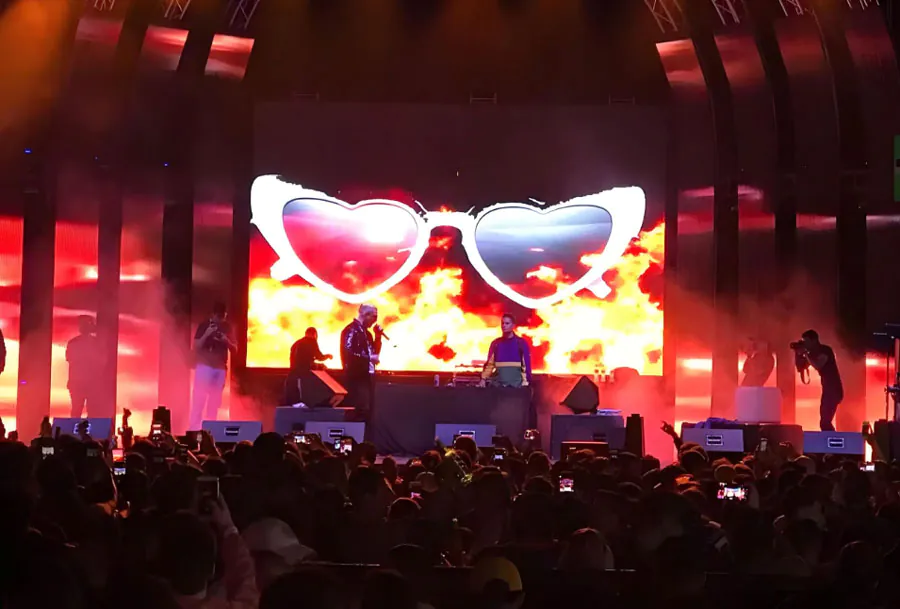
Example 1: Music Festival Weekend
– Requirement: 25m2 stage backdrop, high refresh rate for broadcast, 100,000 attendees.
– Solution: Short-term rental with P4.8 modules, 6,500 nits, on-site operator, redundant processors.
– Outcome: Seamless live feed to screens and broadcast trucks; zero downtime and high audience satisfaction.
Example 2: Seasonal Retail Facade (6 months)
– Requirement: Large-format advertising on a mall fa?ade with daytime visibility and remote content scheduling.
– Solution: Long-term managed rental with IP65 cabinets, remote CMS, scheduled content changes, and monthly maintenance.
– Outcome: Consistent visibility, increased foot traffic, and measurable uplift in seasonal promotions.
Checklist for Selecting a Rental Provider
– Fleet diversity: Can they supply the right pixel pitch and size for your event?
– Technical staff: Are certified riggers and technicians available?
– Support coverage: Does the quote include 24/7 phone support or onsite personnel?
– References and portfolio: Have they executed similar projects recently?
– Insurance and liability: Are certificates and limits adequate for your local regulations?
– Spare inventory: Do they carry spare modules, power supplies, and controllers?
– SLAs and uptime guarantees: What remedies exist for failures or missed service levels?
Sustainable and Cost-Saving Tips
– Choose energy-efficient models for long-term leases to reduce operating costs.
– Negotiate bundled services (setup + CMS + maintenance) to lower total cost.
– Consider shared deployments for recurring smaller events to amortize logistics.
– Reuse content templates across campaigns to reduce content creation costs.
Flexible outdoor LED screen rental packages — both short and long term — offer a strategic pathway to high-impact visual communication without the capital burden of ownership. By understanding the technical specs, logistics, pricing models, and operational requirements, event planners and marketers can select packages that align with their objectives and budgets. Careful specification, robust vendor selection, and proactive risk management ensure that your LED deployment achieves its intended audience impact while remaining reliable and cost-effective. Whether you need a one-night spectacular or a season-long billboard, the right rental partner and package will make your vision visible, scalable, and measurable.