How to Choose the Best Mobile LED Screen Rental in Toronto


Mobile LED screens are a powerful tool for outdoor advertising, concerts, festivals, sports viewing, corporate events, and community gatherings. In a city like Toronto—with diverse neighborhoods, unpredictable weather, tight urban spaces, and strict municipal rules—picking the right mobile LED screen rental is more than price comparison. The right rental affects audience engagement, brand perception, logistical success, and even safety. This guide walks you through the practical and Toronto-specific considerations so you can confidently choose the best mobile LED screen rental for your event.
Understand the Types of Mobile LED Screens
Mobile LED screens come in several configurations. Knowing the main types helps match the screen to your event needs:
– Trailer-mounted screens: Common and versatile; towable trailers with built-in screens and hydraulic lifts for quick setup.
– Truck-mounted screens: Larger footprint, often used for large concerts and sports events; require more space and access for the vehicle.
– Inflatable LED screens: Lighter and faster to set up for temporary events but may have lower brightness and stability.
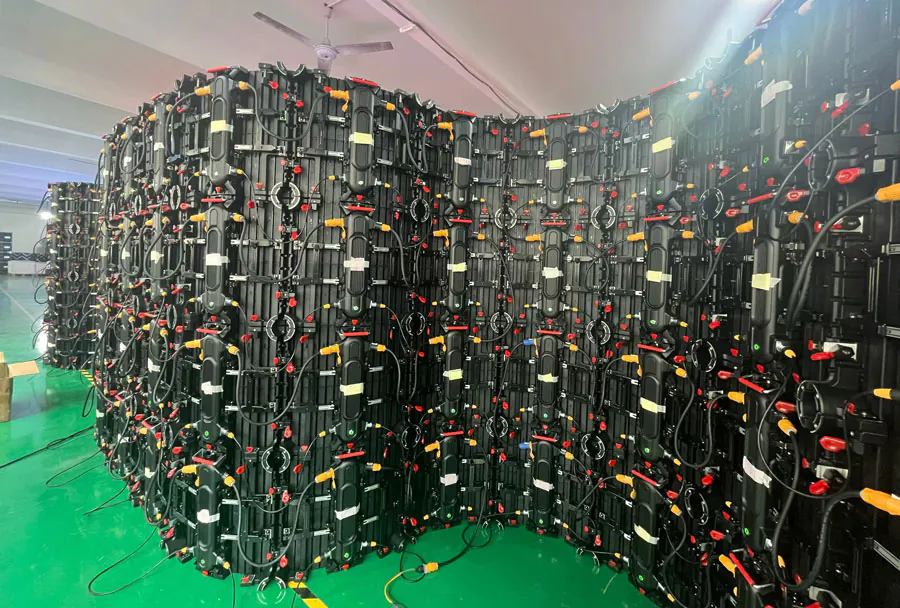
– Walk-in or portable modular screens: Assembled on-site from panels; adaptable sizes and pixel pitches but require more time and crew.
– LED billboards on mobile chassis: Designed for advertising tours and roadshows; optimized for high-visibility street-level campaigns.
Key Technical Specifications to Evaluate
When comparing vendors, focus on specifications that directly affect how your content will look and be perceived:
– Pixel pitch (mm): Determines resolution. Smaller pitch (e.g., P2.6–P4) = sharper image for close-range viewing. Larger pitch (P6–P10) = OK for distant viewers.
– Brightness (nits): For outdoor use, aim for at least 5,000–7,000 nits for daytime visibility; canted or shaded sites may need higher brightness.
– Screen size and aspect ratio: Match to audience size and viewing distance; a 12–20 ft screen works for medium crowds, while big festivals might need 30+ ft.
– Viewing distance: Use pixel pitch and screen height to calculate the minimum clear viewing distance so your audience sees crisp images.
– Contrast ratio and color calibration: Good vendors calibrate color and gamma for natural-looking content even in daylight.
– Weatherproofing and IP rating: Outdoor events need cabinets with adequate water, dust, and wind resistance (IP65 or above is common for outdoor modules).
– Power requirements: Understand if the unit needs external power or comes with a generator and the runtime for long events.
– Control system and inputs: Confirm compatibility with your content sources (HDMI, SDI, media player, live feeds, wireless options).
Toronto-Specific Logistics and Permits
Toronto has municipal rules that impact placement, road use, noise, and public safety:
– Permits: Many public events require a Special Events Permit from the City of Toronto, and some districts require additional permits for displays or street closures.
– Traffic and parking: Mobile units (especially trucks) need legal parking and often a parking permit or lane closure permit. Coordinate with Toronto Transportation Services early.
– Noise bylaws and late-night curfews: If your event includes amplified sound near residential areas, check noise restrictions.
– Public square and park rules: Parks and public spaces often have time and size constraints; some require insurance naming the city as additional insured.
– Winter considerations: Cold and snow affect equipment and setup; heaters, anti-condensation measures, and extra crew time may be needed.
– Local inspections: Be prepared for inspections by city fire or building officials for bigger installations.
Comparative Analysis Table
Below is an analysis table comparing common mobile LED screen configurations to help you match options to typical event needs.
| Option | Typical Screen Size (ft) | Pixel Pitch (mm) | Brightness (nits) | Ideal Use Cases |
|---|---|---|---|---|
| Trailer-Mounted | 12–20 | 4–8 | 5,000–7,000 | Community events, medium concerts, sports viewing |
| Truck-Mounted | 20–40+ | 3–6 | 7,000–10,000 | Large festivals, stadium viewing, major brand activations |
| Inflatable | 10–30 | 6–12 | 3,000–6,000 | Short-term pop-ups, light advertising, small outdoor screenings |
| Modular Panels | Variable (8–60+) | 2.6–10 | 5,000–12,000 | Custom stages, film premieres, high-res close viewing |
| Mobile Billboard (Chassis) | 8–20 | 4–8 | 5,000–8,000 | Street-level advertising, parades, moving campaigns |
Budgeting: What Affects Price
Rental costs vary based on equipment, duration, services, and location. Common cost drivers:
– Screen size and pixel pitch: Bigger and higher resolution cost more.
– Duration: Daily vs. multi-day discounts, setup/teardown windows.
– Delivery distance and vehicle access: Downtown Toronto delivery may add parking or congestion fees.
– Staffing: Operator, technician, and content playback personnel.
– Generators and power: If shore power isn’t available, generator rental adds to cost and fuel.
– Permits and insurance: Vendors may include this or charge as pass-through.
– Content services: If you need content creation, conversion, or live feed integration, budget separately.
– Weather-proofing or special mounting: Extra rigging or wind anchors increase cost.
As a rough guideline (subject to market variation and size): small trailer units often start in the low hundreds to around $1,000/day; mid-size trailer or truck units can be $1,500–$5,000/day; large modular systems for festivals may range $5,000–$20,000/day depending on complexity and support.
Service Levels: What Should the Vendor Provide?
A professional mobile LED rental company should offer clear, documented services:
– Site survey and written proposal: Pinpoint placement, power, sightlines, and local restrictions.
– Delivery, setup, and teardown timeline: Including crew size and arrival windows.
– Trained operator on-site: For the full duration, especially for live events.
– Technical support and backup parts: Redundancy for power supplies, control hardware, and spare modules.
– Content testing and pre-event rehearsal: Proof-of-play and test runs before public start.
– Insurance documentation: General liability and equipment insurance, and willingness to add your organization as additional insured if required.
– Contract with cancellation and weather clauses: Clear terms for inclement weather, road closures, and force majeure.
Questions to Ask Potential Vendors
When collecting quotes, ask these specific questions to differentiate quality vendors:
– What is the pixel pitch and native resolution of the screen?
– What is the typical brightness (in nits) and do you provide brightness calibration for daytime events?
– Do you include delivery, setup, and teardown in the price? If not, what are the line items?
– Will you perform a site visit or provide a site plan recommendation?
– Do you provide a certified operator and onsite technician? What are their credentials?
– What redundancy do you have for critical components (power, control systems)?
– Can you handle live video feeds, satellite, or switcher integration?
– What are the power requirements and do you provide a generator? What fuel will be used?
– Do you carry insurance and can you meet City of Toronto insurance requirements for public events?
– What is your process for severe weather (wind, lightning, heavy snow)?
– Can you provide references or case studies for similar events in Toronto?
Content and Playback: Make It Look Great
Even the best screen will look poor with unprepared content. Ensure:
– Resolution matches the screen’s native pixel matrix. Upscaling or downscaling can reduce image quality.
– Use high-quality source files (H.264/H.265 for playback, or uncompressed for live feeds where possible).
– Account for overscan and safe areas; avoid placing important info at edges.
– Optimize brightness and contrast in your master files knowing screens are very bright outdoors.
– For live events, have a dedicated feed path, test latency, and have an AV tech coordinate with the screen operator.
Site Survey and Placement Considerations
A site survey should evaluate:
– Sightlines and audience zones: Ensure screen height and tilt provide unobstructed views.
– Sun orientation: Avoid strong direct backlight that reduces contrast.
– Rigging points and ground stability: Trailer outriggers and wind loads must be secured.
– Crowd flow and safety perimeters: Keep the screen and support equipment outside public throngs.
– Power source access: Distance to shore power and cable runs; consider generator noise placement.
– Accessibility for delivery vehicles: Confirm turning radii and curb controls in Toronto neighborhoods.
Insurance and Liability
Public events need clear insurance coverage:
– Certificate of Insurance (COI): Vendors should produce a COI with limits appropriate to event size (often $2M–$5M general liability).
– Additional insured: Cities and venues frequently require naming them as additional insured.
– Equipment damage and loss: Clarify who bears responsibility for damage during setup, operation, and teardown.
– Worker safety: Confirm vendor follows OSHA-equivalent practices and has trained rigging staff.
Vendor Selection Checklist (Quick Reference)
– Verify pixel pitch and brightness match your viewing distance and daylight needs.
– Confirm delivery, setup, operator presence, and teardown hours.
– Obtain a detailed quote with line items (delivery, power, permits, staff).
– Ask for references and examples of similar Toronto events.
– Ensure vendor carries appropriate insurance and is willing to add venue/city as additional insured.
– Schedule a site survey and pre-event test.
– Confirm weather and cancellation policies.
– Test your content with vendor playback system well before the event.
Common Pitfalls and How to Avoid Them
– Underestimating brightness: A beautiful indoor-grade image can be lost in midday sun—always prioritize high nits for outdoor events.
– Wrong pixel pitch: Too coarse a pitch makes text unreadable for close audiences—calculate the recommended minimum viewing distance.
– Ignoring power logistics: Last-minute power shortages are a frequent cause of event failures—confirm generator specs and fuel plans.
– Skipping site surveys: Without a site plan you risk blocking sightlines, violating bylaws, or creating unsafe setups.
– Overlooking permits: Permit denials or last-minute fines can derail events; start permit applications early.
Final Steps: Booking and Event Day Best Practices
– Book early and lock in all terms in writing, including contingencies.
– Share an event schedule and contact list with the vendor, venue, and production team.
– Hold a technical rehearsal or at least a content proof-of-play session.
– Designate a single point of contact (POC) for vendor communications on event day.
– Keep spare media and an offline playback option in case of a live feed failure.
– Monitor weather and have a contingency plan for storms or excessive wind.
Make an Informed Choice
Choosing the best mobile LED screen rental in Toronto means balancing technical needs, local logistics, budget, and vendor capabilities. Prioritize brightness, pixel pitch, and a professional vendor who provides site surveys, on-site technicians, and the right insurance. Start conversations early with multiple vendors, perform a thorough site assessment, and test your content well in advance. With the right planning and a reliable supplier, your mobile LED screen will become a standout element that elevates your event, engages audiences, and protects your investment.