Las Vegas Event Trends 2026 — What Buyers Are Specifying Now

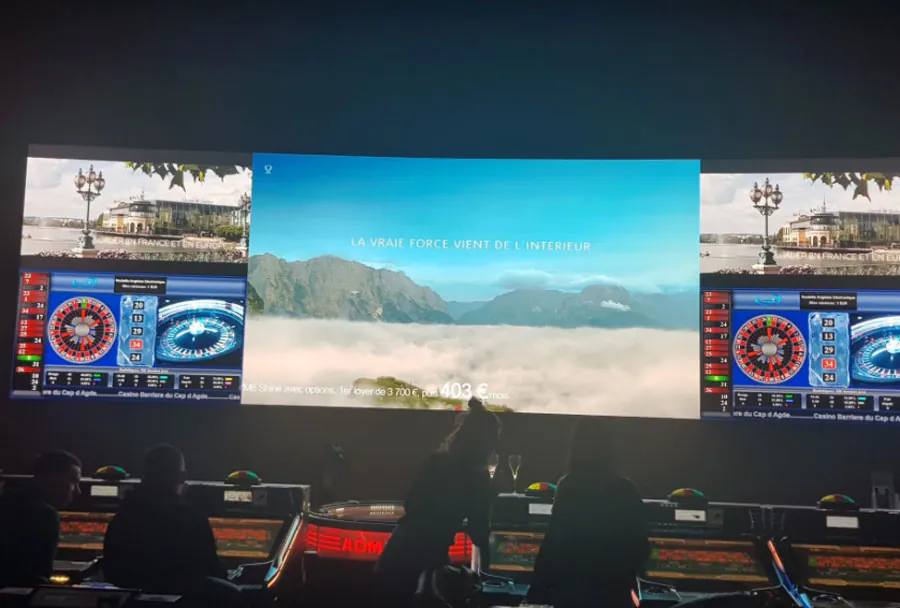
Las Vegas event trends 2026 point the same way in every hall: brighter outdoor cabinets, finer indoor pitch, shorter build windows and content that is designed for the screen rather than resized for it. The city hosted nearly 6 million convention attendees in 2025 across more than 14.5 million square feet of exhibit space, and demand at that scale changes what rental fleets buy.
This page covers the four trends that are actually visible in specifications and purchase orders, and what each one means for hardware, crews and budgets. Claims about futuristic product categories are easy; the useful question is which cabinet, processor or service item a trend turns into.
Table of Contents
- 1. The 2026 Landscape in One Page
- 2. Immersion and Blended Reality
- 3. Personalisation at Scale
- 4. Sustainable Kit and Agile Deployment
- 5. Convergence of Content and Hardware
- 6. What the Hardware Actually Supports
- 7. A Planning Checklist for 2026
- FAQ
- Conclusion
1. The 2026 Landscape in One Page
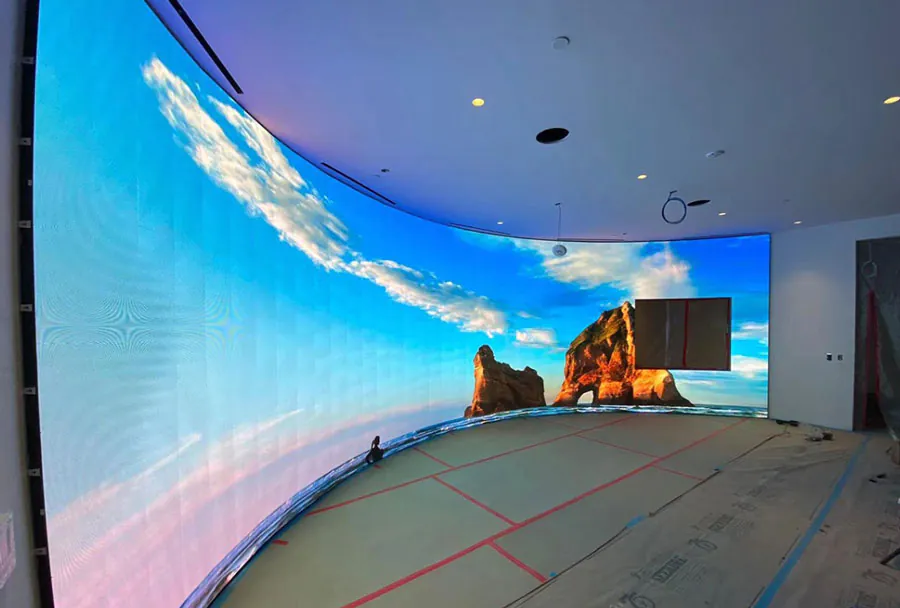
Four interconnected trends reshape client expectations and technical requirements.
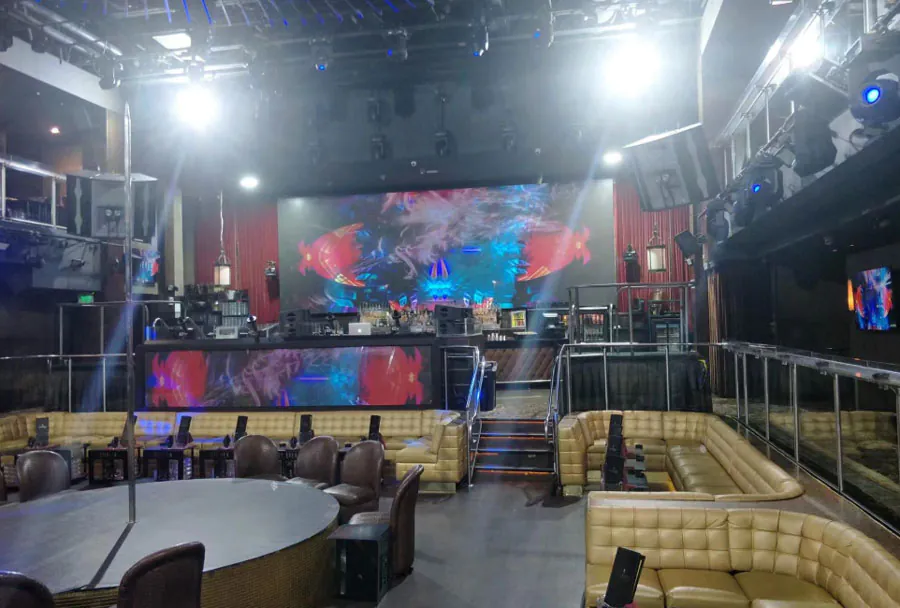
Total immersion and blended realities. Events are no longer about passive viewing; audiences expect to be inside the experience. That means high-resolution LED integrated with AR, VR and real-time interactive content, and it means the screen is designed into the room rather than added to it.
Hyper-personalisation at scale. Content adapts to audience interaction, location within a venue, or session track. The practical requirement is multi-zone playback and a processor that can drive several surfaces independently.
Sustainable and agile solutions. Clients ask about power draw, reusability and transport weight, while still demanding rapid deployment. Modular cabinets and lighter cases answer both.
Convergence of content and hardware. The display is an active part of the narrative, which pulls content creators into planning earlier and changes the brief from “a screen this size” to “this canvas, this pixel map”.
The Las Vegas Convention and Visitors Authority publishes the visitor and convention figures behind this demand, and the International Association of Exhibitions and Events tracks how show floors are adapting to it.
What follows is what each trend changes in a purchase order, not what it changes in a keynote.
Las Vegas event trends 2026 start with build windows, because resort halls schedule load-in by the hour.
Las Vegas event trends 2026 favour finer pitch indoors and brighter cabinets outdoors, not a single compromise wall.
2. Immersion and Blended Reality
Immersion is usually described as a creative ambition. In hardware terms it is a geometry problem.
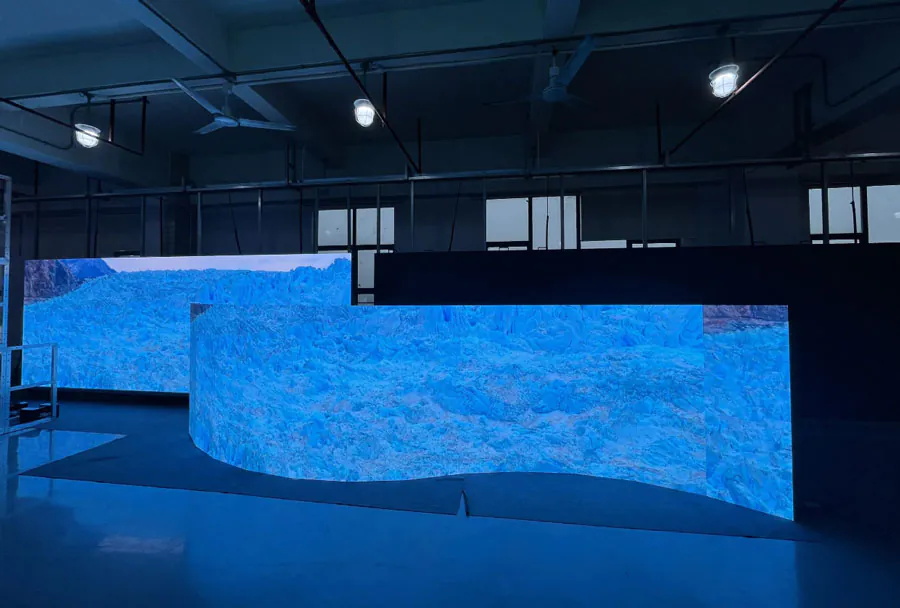
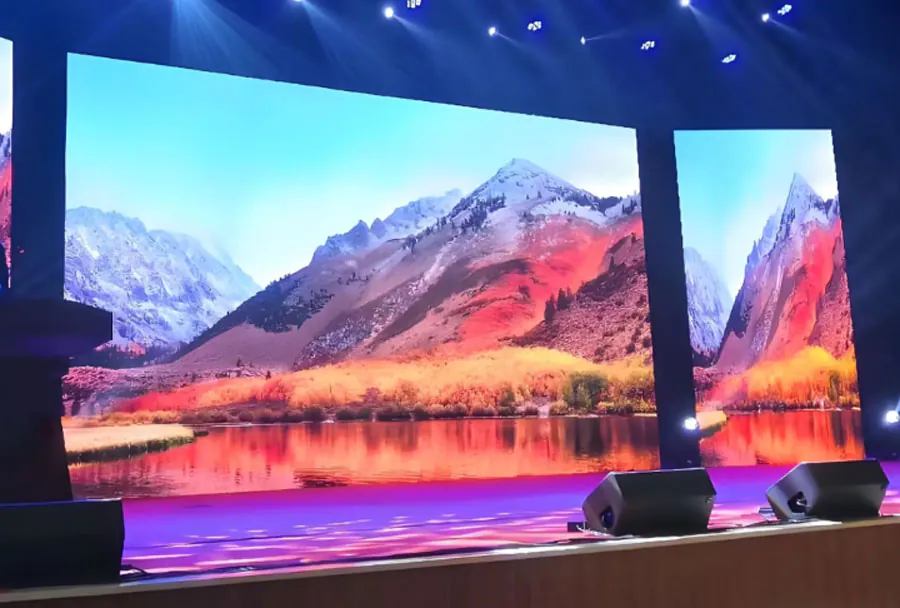
A wraparound environment needs cabinets that curve without visible seams, which means curved locks in the −10° to +15° range or flexible cabinets at ±22.5°, plus a pixel map that accepts a warped image.
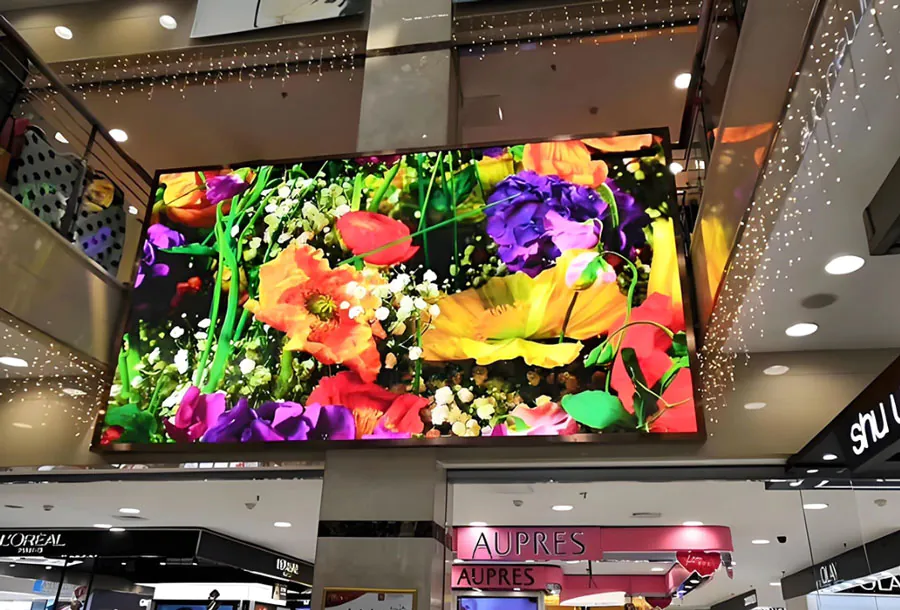
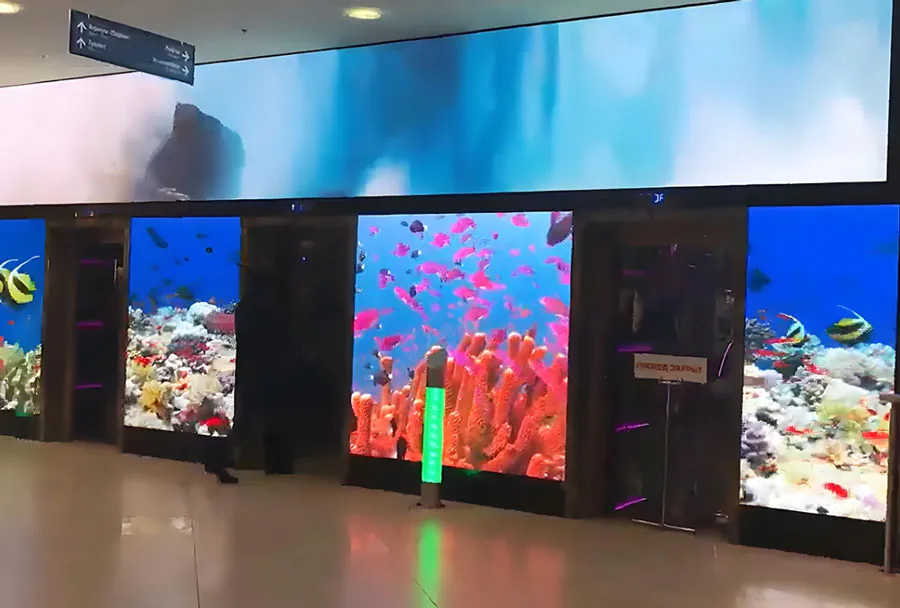
It also needs pitch matched to a viewer who is closer than in a conventional ballroom. A wall that a guest can walk up to is a wall read at two metres, which puts the specification at P1.9–P2.6 rather than P3.9.
Three practical consequences appear in orders:
- Curved and flexible cabinets are specified alongside flat ones, from the same batch, so a single wall can change plane.
- Processing capacity rises, because a curved or multi-surface build is rarely one rectangle.
- Content delivery moves earlier, since a custom canvas cannot be resized from a 16:9 master without distortion.
The honest limit: not every venue allows the structure that immersion implies. Resort ballrooms restrict rigging, so an immersive build often stands on ground support with ballast inside the room’s load limits. That constraint shapes the design more than the creative brief does.
3. Personalisation at Scale
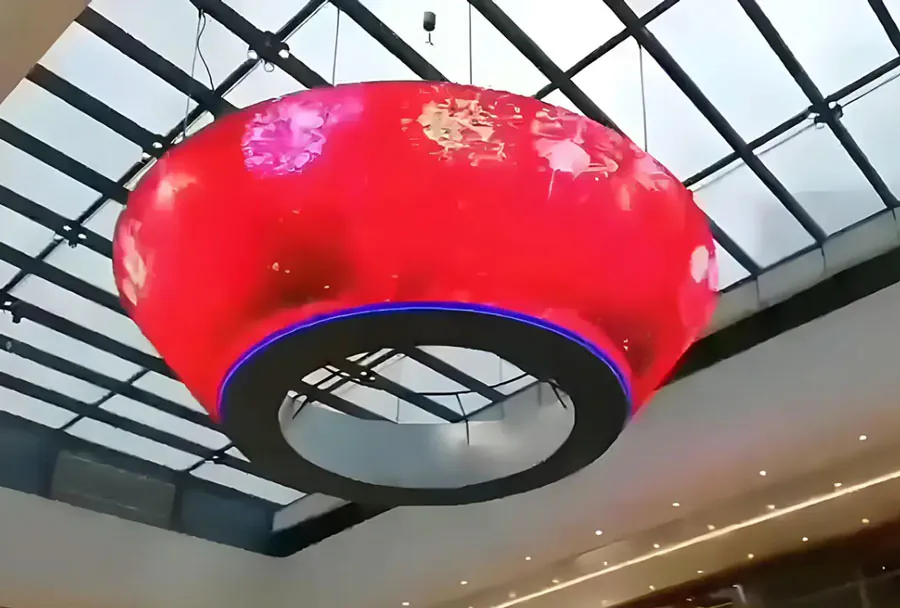
Personalisation sounds like software. On an LED wall it is multi-zone playback and a processor with enough outputs.
A hall that shows a session-specific graphic in one zone, a sponsor loop in another and a live feed in a third needs three independent sources running in sync, not one stretched feed. That changes the processor specification, the cabling plan and the number of playback devices carried in the case.
Three specification items follow:
- Zone count. Confirm how many independent surfaces the processor drives before promising a concept.
- Failover per zone. A backup that only protects the main wall leaves the sponsor loop dark.
- Content handover. Personalised content means more files and later changes, so the deadline and re-encoding terms belong in the contract.
The trap is promising interactivity without a sensor or data path in the design. Motion capture, badge data and session feeds all need a route to the processor, and that route is a budget line, not a feature.
For a rental company, the practical response is to standardise on a processor family that covers single-wall and multi-zone work, so crews do not relearn a platform per show.
Las Vegas event trends 2026 also favour cabinets that match an existing fleet batch, so replacements stay invisible.
Las Vegas event trends 2026 content is designed at the native canvas rather than resized from a deck.
4. Sustainable Kit and Agile Deployment
Sustainability requests arrive as three specific questions: how much power does the wall draw, how much of it is reusable, and how heavy is the freight.
Power. A P3.9 cabinet at moderate brightness draws far less than the same area driven at maximum output. Quoting calibrated brightness rather than peak is both a technical and a sustainability decision.
Reuse. Modular cabinets that return to the warehouse and ship to the next show are the reuse model in this industry. The specification that supports it is batch matching plus a real spares ratio, because a fleet that cannot repair becomes waste.
Freight. Case design moves more emissions than most buyers expect. Slimmer cases reduce drayage weight and truck volume, and on a convention floor drayage is billed by weight.
Agility. The same city that asks for sustainability also asks for a four-hour rebuild. Lighter cabinets, quick locks and pre-addressed receiving cards serve both goals at once.
Practical answer for a proposal: state calibrated brightness, expected power draw at that brightness, the spare ratio, and the case count. Those four numbers answer most sustainability questionnaires better than a policy page.
5. Convergence of Content and Hardware
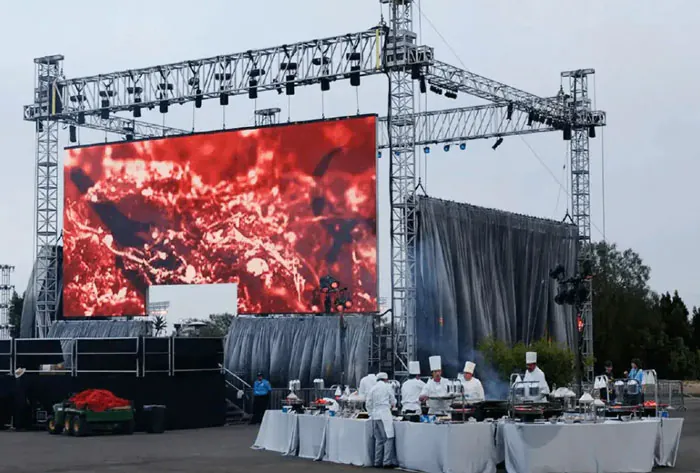
When the screen carries the narrative, the content team has to know the canvas before the script is locked.
That shifts the project sequence. Instead of designing content to a nominal 16:9 and hoping the wall fits, the wall’s native pixel count and cabinet grid are fixed first, then content is authored to that grid with safe areas for logos, captions and lower thirds.
Three working practices make the shift practical:
- Publish the pixel map at kickoff. Width and height in pixels, cabinet count, and the aspect ratio the wall actually produces.
- Test with real content, not bars. A grey-scale ramp reveals banding that test patterns hide.
- Agree the change window. After a certain date, resizing the wall or the content costs crew hours, not just edit time.
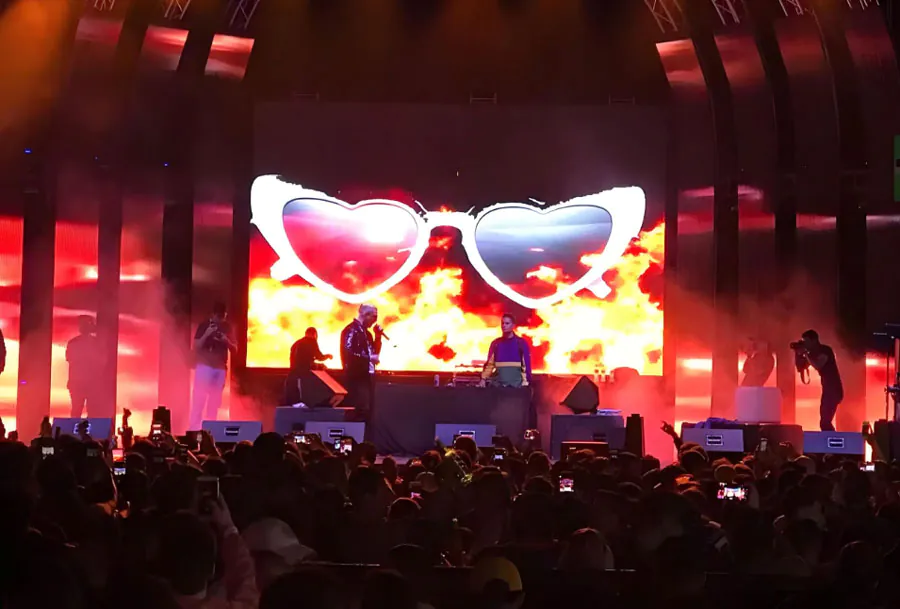
This is also where refresh rate earns its place in the brief. Camera-facing content at 3,840 Hz or higher avoids banding in IMAG and streaming, and it is cheaper to specify at order than to fix on site.
6. What the Hardware Actually Supports
The trends above translate into a short list of real capabilities, and it is worth being precise about which ones a given cabinet line provides.
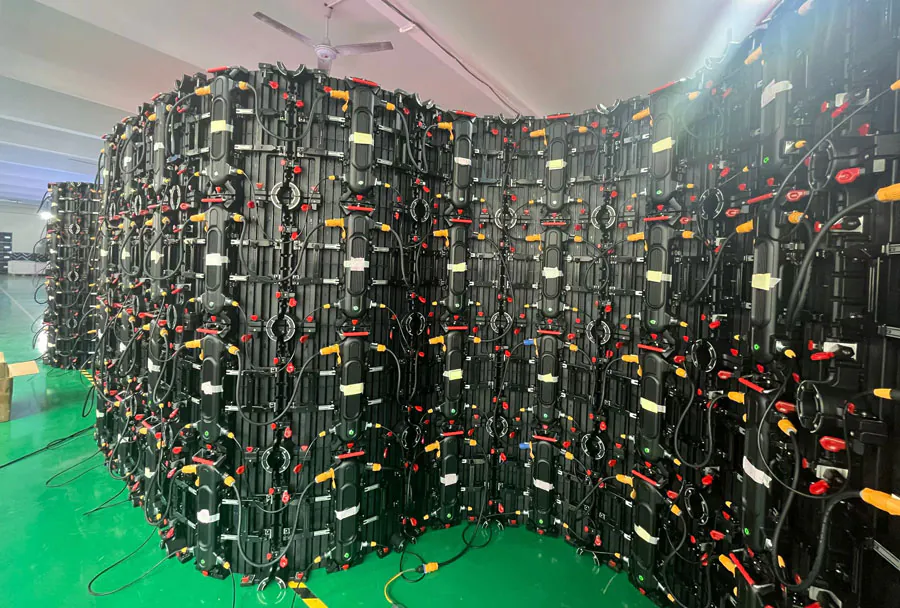
Shape options. Rental cabinets are available with straight, 90-degree, curved (−10° to +15°), flexible (±22.5°) and 45-degree bevel locks, which covers most immersive and multi-plane builds without custom tooling.
Pitch range. P1.953 to P6.67 across the range, so a single project can pair a fine-pitch close-view wall with a coarser distance wall from the same production batch.
Refresh and processing. 3,840 Hz and above for camera work, with calibration saved to hardware so a replacement cabinet inherits the wall’s settings.
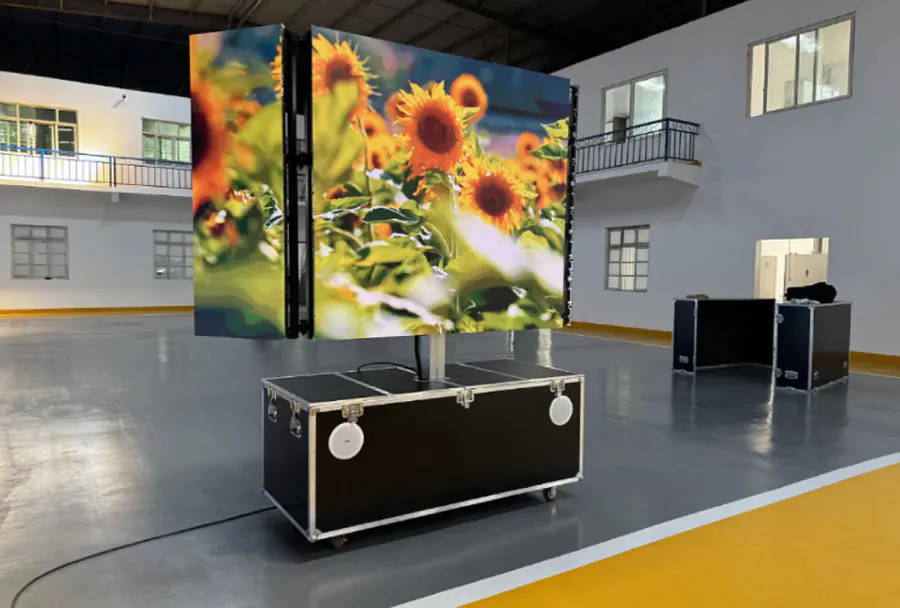
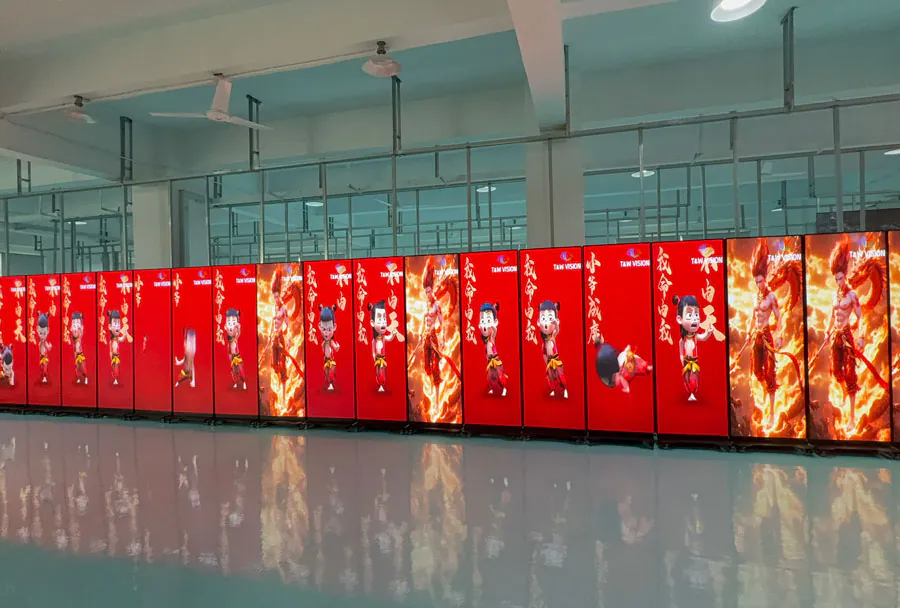
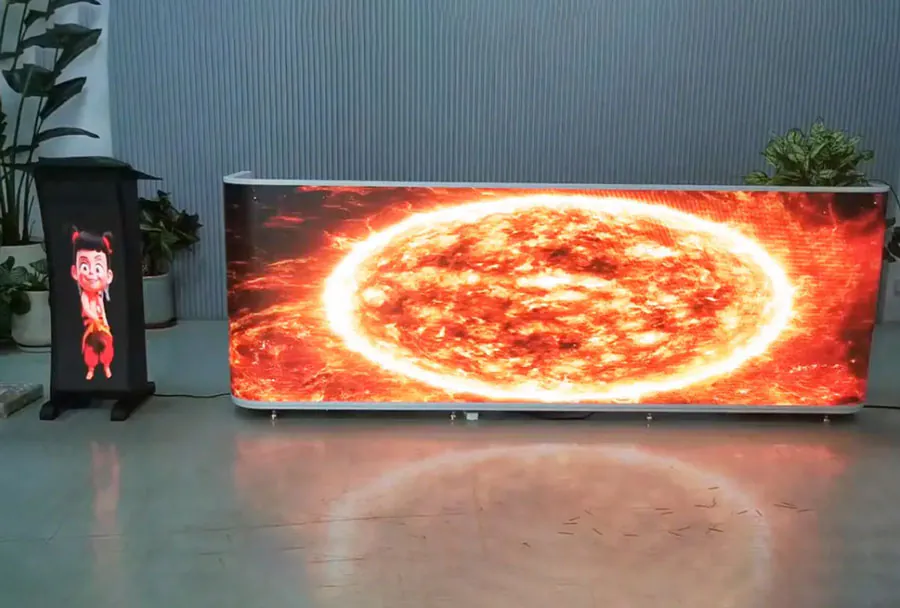
Poster and podium formats. A P1.86 folding poster at 640 × 1920 mm and a P1.86 all-in-one podium at 960 × 480 mm cover lobbies, showrooms and press positions where a full wall is more screen than the room needs.
Stock position. PQ P2.6, the LP-H P1.86 poster, the P1.8 podium and the IP-CT P2.5 ship from Atlanta; other pitches are factory order at 15–20 days. Any planning calendar should start there rather than at a wish list.
7. A Planning Checklist for 2026
Six questions separate a 2026-ready brief from a 2019 one.
- What is the native canvas? Pixels, not inches, and the cabinet grid behind it.
- Who is the closest viewer? It sets pitch more than the room does.
- How many independent zones? It sets processor capacity and playback count.
- Will it be filmed? If yes, refresh and genlock belong in the specification.
- Can the building carry the structure? Rigging restrictions decide between flown and ground-supported before design starts.
- What is in stock now? Lead time decides whether the concept is possible on the date.
Answer those six and the trend conversation becomes a purchase order.
Las Vegas Event Trends 2026 — FAQ
Are these trends changing what rental companies buy?
Yes, in three visible ways: finer indoor pitch for camera-facing work, more curved and flexible cabinets for immersive builds, and higher processor capacity for multi-zone playback.
Is outdoor work growing in Las Vegas?
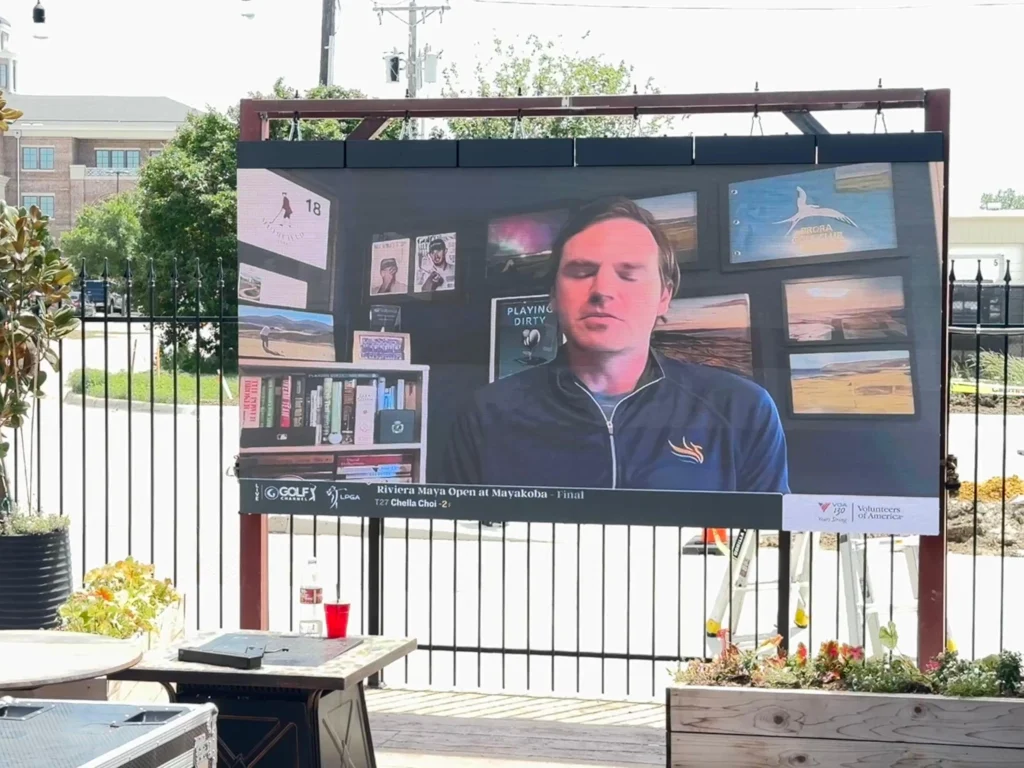
It is, particularly plaza activations and festival stages. Those builds need IP-rated cabinets, ballast and a written wind-response plan rather than an indoor wall placed outside.
What does sustainability mean in practice?
Calibrated brightness instead of maximum output, a real spares ratio so the fleet can be repaired, lighter cases to cut drayage weight, and modular cabinets that return to the warehouse between shows.
How early should content be locked?
Before the wall is ordered, ideally. The native pixel map and cabinet grid determine safe areas, and resizing after that point costs crew hours as well as edit time.
Where can I check the visitor and convention figures?
The LVCVA publishes annual visitor and meeting data, and show-floor practice is tracked by the IAEE.
Conclusion
Las Vegas event trends 2026 are less about new product categories than about precision: the right canvas, the right pitch for the closest seat, enough processing for every zone, and a structure the building will actually allow.
For the buying decision behind those trends, see LED screen rental in Las Vegas and trade show LED screen rental in Las Vegas.
Buyers comparing Las Vegas event trends 2026 options should ask for the cabinet count, the spare ratio and the processor model in writing.