Professional Outdoor LED Screen Rental Services Near You

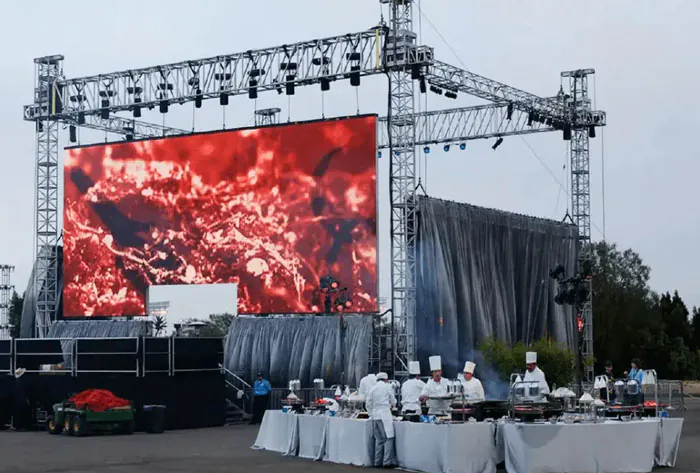
Outdoor events demand visual solutions that are bright, reliable, and scalable. Whether you’re staging a concert, hosting a sporting event, organizing a corporate gathering, or running an outdoor advertising campaign, professional outdoor LED screen rental services near you can provide the equipment, technical expertise, and logistical support to make the experience memorable. This article explains what professional outdoor LED screen rental services offer, how to choose the right provider, technical specifications to consider, logistical and permitting requirements, typical cost drivers, and a practical checklist to help you manage a successful outdoor LED deployment.
Why Rent an Outdoor LED Screen Instead of Buying?
Renting is often the most efficient option for organizations that need high-quality led displays but do not require permanent installations. Key advantages include:
– Cost efficiency: Upfront purchase costs for large outdoor LED screens are substantial. Rentals convert capital expense into predictable operating expense.
– Flexibility: Rental inventories include a range of sizes, pixel pitches, and mounting options. You can match screen specs to each event.
– Technical support: Professional rental services provide on-site or remote technical crews for setup, operation, and troubleshooting.
– Latest technology: Rental fleets are frequently refreshed, ensuring access to current brightness, pixel density, and connectivity standards.
– Storage and maintenance: The rental company handles storage, maintenance, and transport when the screen is not in use.
Core Services Offered by Professional Outdoor LED Screen Rental Providers
Rental companies typically offer a combination of the following services:
– Equipment rental: LED panels, frames, rigging, mounting trusses, cabinets, and protective weather covers.
– Delivery and logistics: Transportation, staging, loading, and unloading of equipment.
– Installation and rigging: Structural mounting, scaffolding, ground supports, and safety systems.
– On-site technical crew: Technicians to assemble, calibrate, and operate the video wall during the event.
– Content playback and management: Media servers, switchers, live feed integration, and content scheduling.
– Power and network solutions: Generators, power distribution units, fiber or wireless links, and redundancy planning.
– Maintenance and emergency response: Spare panels, on-the-fly replacements, and mitigation plans for weather or technical faults.
– Permitting assistance: Support with local code compliance, road closures, and event permits.
Key Technical Specifications to Evaluate
Selecting the right LED screen for your event requires attention to technical details that impact image quality, reliability, and cost-effectiveness:
– Pixel pitch: Distance between pixel centers (measured in mm). Smaller pixel pitch yields higher resolution at close viewing distances. Common outdoor rental pitches range from P2.5 to P10.
– Brightness (nits): Outdoor screens require high brightness to overcome sunlight. Typical outdoor brightness ranges from 4,000 to 8,000 nits; direct sun applications may need 6,000+ nits.
– IP rating and weatherproofing: Outdoor cabinets should be rated at least IP65 for protection against rain and dust.
– Refresh rate: Higher refresh rates (≥ 3,840 Hz for broadcast applications) prevent flicker on camera and enhance motion rendering.
– Contrast ratio and color calibration: Ensure vendor performs color calibration and provides true color reproduction under variable lighting.
– Viewing distance and screen size: Determine optimal size and pixel pitch using expected audience distance and the content type (video, text, live feed).
– Rigging and structural load: Confirm that mounting systems meet local safety standards and that the venue can support wind loads and structural weight.
Analysis Table: Recommended Configurations by Event Type
| Event Type | Recommended Screen Size | Recommended Pixel Pitch | Brightness (nits) | Typical Rental Price (per day) |
|---|---|---|---|---|
| Outdoor Concert / Festival | 20–60 ft wide (variable modular panels) | P3.9–P6.25 | 6,000–8,000 | $1,500–$8,000 |
| Sporting Event / Stadium Jumbotron | 30–100+ ft wide | P4–P10 | 6,000–10,000 | $3,000–$15,000+ |
| Outdoor Movie / Drive-In | 15–40 ft wide | P3.9–P6.25 | 4,000–6,000 | $800–$4,000 |
| Corporate Launch / Outdoor Activation | 10–30 ft wide | P2.9–P4.8 | 4,000–7,000 | $700–$5,000 |
| Outdoor Advertising / Roadside LED | Variable (tall/long) | P4–P10 | 8,000–12,000 | $1,200–$10,000+ |

Note: Pricing is indicative and can vary widely by market, season, transport distance, and additional services required (power, crew, permits).
How to Choose the Right Rental Provider Near You
Selecting a vendor is as important as choosing the screen. Consider these factors:
– Local presence and inventory: A provider with local warehouses reduces transport time and cost and improves response times for emergencies.
– Experience and references: Check case studies, client references, and recent event galleries. Experienced teams navigate permits, power logistics, and changing weather.
– Technical certifications and safety compliance: Ask about rigging certifications, load calculations, and insurance. A reputable vendor will provide proof.
– On-site support: Confirm whether technicians are included and their hours of coverage. For multi-day events, 24/7 on-site or on-call technicians may be required.
– Redundancy planning: Ensure spare modules, backup power, and failover solutions are available to minimize downtime.
– Content services: Some vendors offer content design and playback services, simplifying coordination when your team lacks technical capability.
– Transparent quoting: Look for detailed proposals listing equipment, manpower, transport, permits, and contingency fees.
Cost Drivers and Budgeting Tips
Several variables influence the cost of renting an outdoor LED screen:
– Screen size and pixel pitch: Larger screens and finer pixel pitch cost more.
– Brightness: High-nit screens and HDR-capable panels command a premium.
– Duration and seasonality: Peak season or holiday weekends may increase rates.
– Logistics: Distance from the vendor’s warehouse, truck requirements, and access complexity adds to cost.
– Power and generator needs: Portable generators and fuel can be a significant portion of the budget for remote sites.
– Crew and labor: Skilled riggers and operators are billed by the hour or day.
– Permits and inspections: Municipal permits, inspection fees, or police support may be required.
– Insurance: Vendor or client insurance for equipment and liability may be required.
Budgeting tips:
– Request an itemized quote to identify negotiable items.
– Book early to lock in rates and ensure equipment availability.
– Consider package deals that include screen, rigging, and technical crew.
– Factor in contingency (typically 10–20%) for unexpected expenses.
Permitting, Safety, and Regulatory Considerations
Outdoor LED installations are subject to local laws and safety codes. Common considerations:
– Structural permits: For large truss assemblies or suspended screens, you may need engineer-signed load calculations and permits.
– Zoning and advertising bylaws: Digital signage regulations may restrict brightness, hours of operation, or message content.
– Electrical permits: Portable generators and temporary power distribution may require inspection.
– Road and public space permits: Street closures, pedestrian flow adjustments, and vehicle access need coordination with local authorities.
– Safety plans: Fall protection, crowd barriers, wind mitigation, and emergency evacuation routes should be documented.
– Environmental restrictions: Noise, light pollution, and wildlife protections can affect event timing and display brightness.
Work with your rental provider to obtain necessary documentation and ensure both vendor insurance and client liability coverage are in place.
Installation, Operation, and Weatherproofing Best Practices
Successful outdoor LED deployments depend on meticulous planning and technical discipline:
– Pre-event site survey: Verify site elevation, sun angles, power availability, and access for trucks and cranes.
– Staging and rigging: Use engineered truss systems sized for wind loads and the screen’s surface area. Ground supports and ballast may be required.

– Power management: Use dedicated circuits, UPS for critical feed systems, and properly rated generators. Factor in inrush current when powering up large arrays.
– Weatherproofing: Ensure all cable connections and cabinets are sealed. Deploy wind screens or steeper tilts to reduce sail effect in high winds.
– Calibration and color matching: Calibrate panels for uniform brightness and color temperature. Check for banding or visible seams.
– Lighting and sightlines: Position screens to avoid direct sunlight washout. Consider anti-glare treatments or directional mounting.
– Safety and crowd control: Secure the footprint with fencing as needed and keep rigging areas restricted during public access.
– Redundancy and spares: Keep spare panels, power distribution units, and critical cabling on-site.
Content Strategy and Playback Considerations
The display is only as effective as the content it shows. Professional rental services may help with design, but you should plan as follows:
– Resolution and aspect ratio: Match your content resolution to the screen’s pixel matrix to avoid scaling artifacts.
– File formats and codecs: Use vendor-recommended codecs and container formats for reliable playback.
– Dynamic content and live feeds: Coordinate latency and feed formats for live video, social media walls, and broadcast feeds.
– Brightness-aware design: Avoid dark, low-contrast visuals that get lost in bright outdoor environments.
– Readability: For text and sponsor messages, use large type and high contrast. Keep essential information visible for the expected viewing distance.
– Scheduling and ads: Design a content rotation that respects local advertising rules and avoids repetitive messaging fatigue.
Case Studies: How Rental Services Add Value
– Music Festival: A multi-stage festival required 40 ft screens on two main stages. The rental provider delivered modular P4 panels with 8,000-nit brightness, coordinated generator placement, and provided two technical crews for the weekend. The result: sharp live-action visuals visible even in daylight, with minimal downtime due to spare modules on-site.
– Corporate Product Launch: A tech firm needed a crisp visual wall for a product reveal at an outdoor plaza. The rental service supplied a P2.9 LED wall for close viewing, synchronized video playback with live camera feeds, and provided content synchronization across smaller satellite displays.
– Outdoor Movie Night: A city organized a series of family movie nights. The rental company supplied an inflatable frame with a P6 LED screen, moderate brightness, and simple playback via USB/HDMI for an economical community option.
Pre-Event Checklist
– Confirm event date, load-in and load-out windows.
– Obtain site plan and identify power sources and access points.
– Choose screen size and pixel pitch based on audience distance.
– Request an itemized quote including delivery, rigging, crew, power, and permits.
– Verify vendor insurance, rigging certifications, and references.
– Confirm content specs and playback system compatibility.
– Schedule technical rehearsal and on-site testing time.
– Prepare backup content and file formats.
– Arrange for weather contingency and emergency contacts.
Frequently Asked Questions (FAQ)
Q: How far in advance should I reserve an outdoor LED screen?
A: Reserve as early as possible—ideally 6–12 weeks before a major event, particularly in peak seasons.
Q: Can an outdoor LED screen withstand a rainstorm?
A: Properly rated outdoor LED cabinets (IP65 or higher) handle rain, but severe weather like high winds or lightning requires shutdown and protective measures.
Q: What is pixel pitch and why does it matter?
A: Pixel pitch measures the spacing between pixels. Smaller pitch gives higher resolution and is needed for close viewing distances.
Q: Are generators noisy or disruptive?
A: Generators produce noise; modern rental firms offer quieter models and can position generators remotely to minimize disruption.
Conclusion: Partnering with Local Professionals for Success
Choosing professional outdoor LED screen rental services near you brings technical competence, local knowledge, and logistical efficiency to your event. The right partner will help you select the optimal screen size and pixel pitch, manage power and permitting, deploy safe rigging, and ensure content looks great under outdoor lighting conditions. By planning early, requesting detailed quotes, confirming certifications, and building redundancy into your plan, you’ll maximize impact and minimize risk. When done well, a professional outdoor LED installation turns large outdoor spaces into immersive visual experiences that engage audiences and amplify your message.