Custom-Shaped LED Displays for Theme Parks: Design and Applications

Custom-Shaped LED Displays for Theme Parks: Design and Applications starts with a practical question: how can a screen become part of the attraction instead of looking attached to it?
Table of Contents
- 1. Design the Shape Around the Attraction’s Story
- Translate the concept into buildable geometry
- 2. Match Image Quality to Real Guest Viewing Positions
- Test the content that matters
- 3. Engineer the Complete Installation for Its Environment
- Review operating conditions and service access
- 4. Build the Content Workflow Alongside the Hardware
- Separate the scene from the output map
- 5. Protect Readability, Accessibility, and Guest Comfort
- Keep essential information dependable
- 6. Commission the Show and Plan for Component Failure
- 7. Why to choose TW VISION to produce your custom-Shaped LED Displays
- Test failure states as well as normal playback
- How do you film a custom LED display without visible bands?
- Can a custom LED installation move with an animatronic?
- Who should own the source files for themed LED content?
- When is projection a better choice than a custom LED surface?
- What should you do when the original LED modules are discontinued?
- Conclusion
A useful fact is that an enclosure’s ingress protection rating addresses access, solid objects, and water—not whether the complete installation can withstand wind loads, as the International Electrotechnical Commission’s explanation of IP ratings makes clear.
That distinction matters when your display must serve as scenery, survive outdoor conditions, and remain accessible for repairs. An impressive concept can become difficult to operate if the design ignores viewing angles, structural support, content mapping, or maintenance access.
Successful installations connect creative intent with measurable engineering requirements. The decisions below cover shape, image quality, environmental protection, content production, guest experience, and commissioning, helping you turn an unusual display concept into a specification that designers, suppliers, and operations teams can evaluate together.
1. Design the Shape Around the Attraction’s Story
A custom LED display should reinforce the attraction’s story while allowing its physical structure to be manufactured, supported, and maintained.
Start by defining what the surface represents. A scenic object needs a different outline and finish from a screen guests must read while walking.
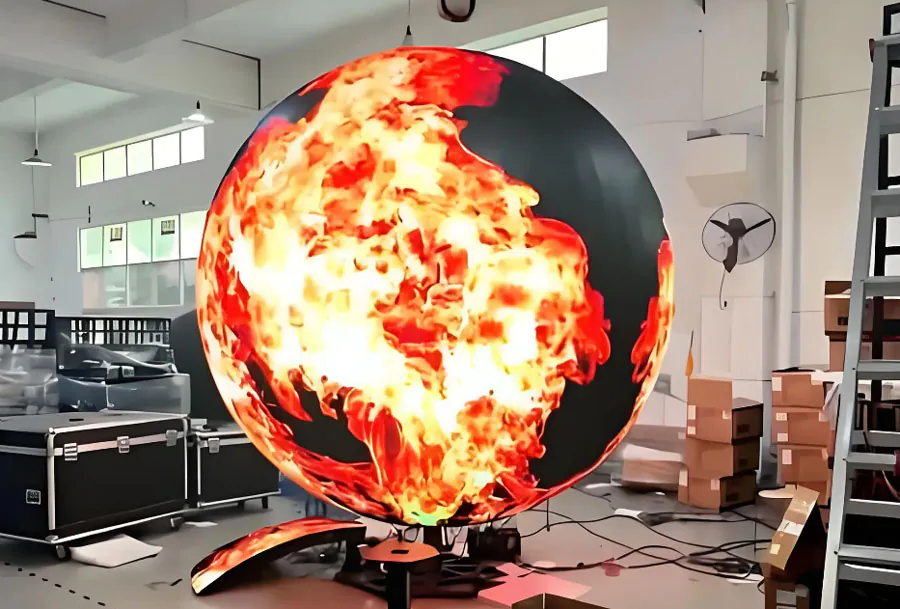
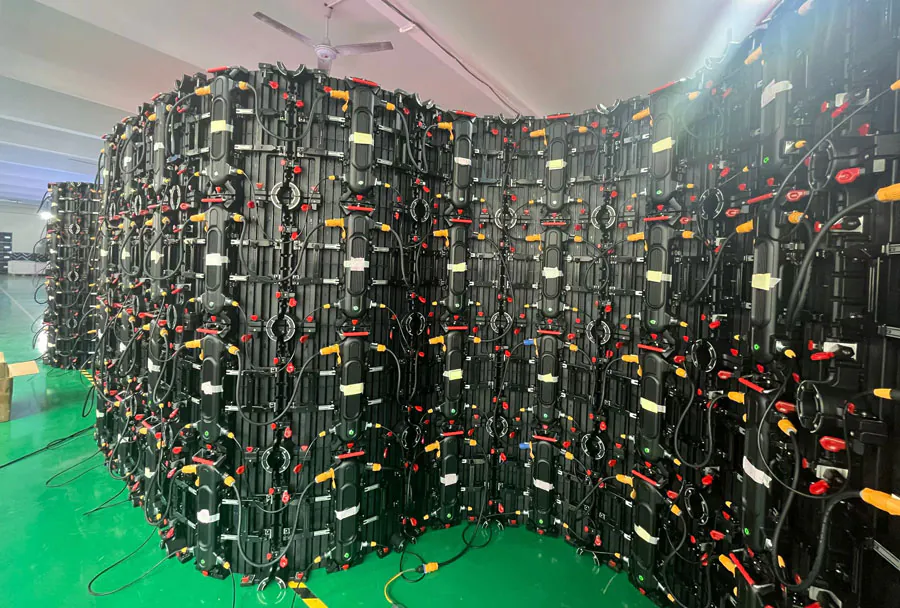
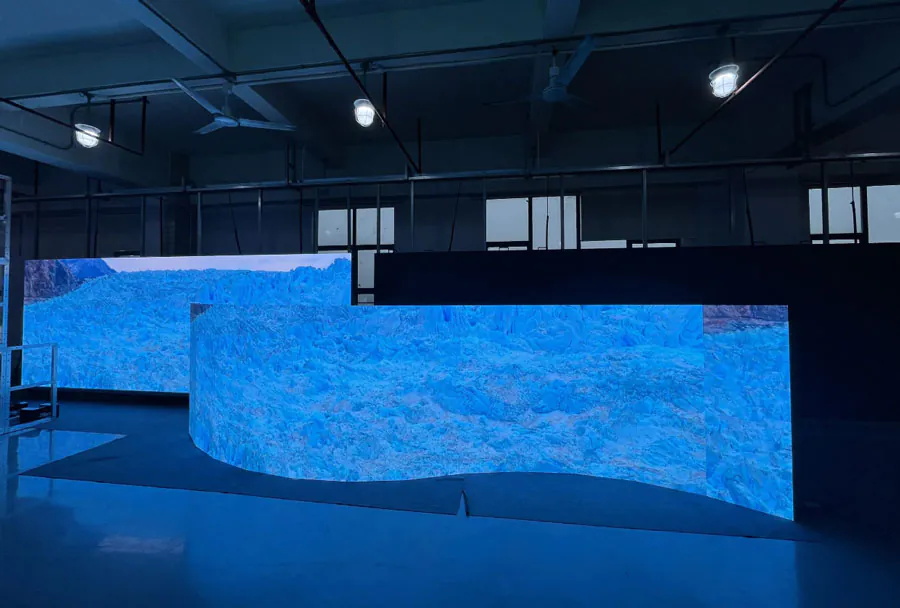
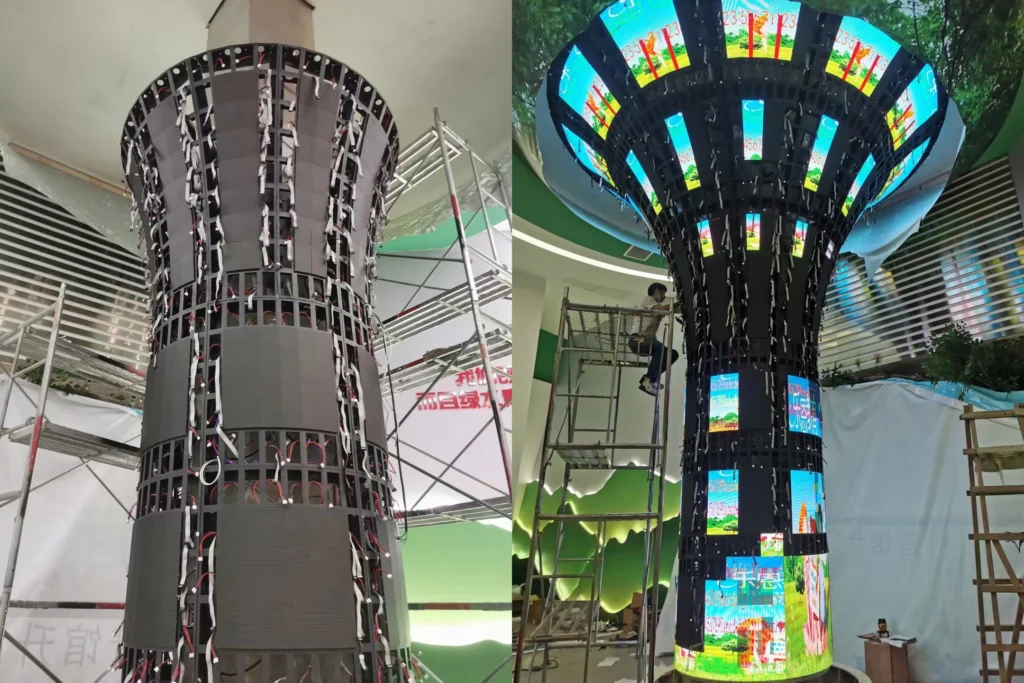
For Custom-Shaped LED Displays for Theme Parks: Design and Applications, distinguish between the visible silhouette and the underlying LED assembly. A sculpted outer frame can create an irregular outline around conventional modules; a continuously curved surface may require flexible modules or cabinets designed for that curvature. Module geometry, bend radius and masking options for both approaches are compared in our guide to custom shaped LED display types.
Translate the concept into buildable geometry
Rhino is a modeling tool for developing free-form geometry, including NURBS curves and surfaces. Its models can help your team communicate curvature, cabinet boundaries, support locations, and service clearances before fabrication.
Consider a glowing portal at a ride entrance. Its outer silhouette might be highly organic, while the illuminated area uses repeatable segments that technicians can replace independently.
Document these decisions:
– Which edges guests can see.
– Where seams may cross important imagery.
– How scenery attaches without obstructing ventilation.
– Which components can be removed for service.
A useful brief for Custom-Shaped LED Displays for Theme Parks: Design and Applications separates the artistic shape from the construction method.
How to apply this: Annotate your concept drawing with visible edges, likely module divisions, support zones, and service access before requesting supplier proposals.
2. Match Image Quality to Real Guest Viewing Positions
The right image specification depends on where guests stand, what they need to recognize, and how the display behaves under actual lighting.
Pixel pitch describes the spacing between neighboring pixel centers. Manufacturer specifications, including those available from Christie, identify pitch alongside other characteristics such as brightness; neither metric alone establishes whether your content will work.
For Custom-Shaped LED Displays for Theme Parks: Design and Applications, map the nearest intended viewing position, typical approach route, and most oblique sightline. Avoid choosing pitch solely from a supplier’s general viewing-distance recommendation.
Test the content that matters
A queue display carrying instructions needs a different acceptance test from an overhead surface showing abstract motion. Test your actual text, symbols, gradients, and dark scenes on representative hardware.
Curved surfaces also change the angle between guests and the LEDs. Apparent brightness and color consistency should be assessed from the positions guests will occupy.
| Application | Primary concern | What to check |
|---|---|---|
| Queue instructions | Readability | Test actual text |
| Scenic portal | Visible seams | Review dark scenes |
| Overhead canopy | Viewing angle | Walk guest routes |
| Outdoor landmark | Ambient light | Compare day and night |
| Ride scenery | Motion clarity | Test show playback |
An acceptance plan for Custom-Shaped LED Displays for Theme Parks: Design and Applications should define observable results, rather than rely on the phrase “high resolution.”
How to apply this: Ask each shortlisted supplier to demonstrate your content from the planned viewing positions under representative lighting.
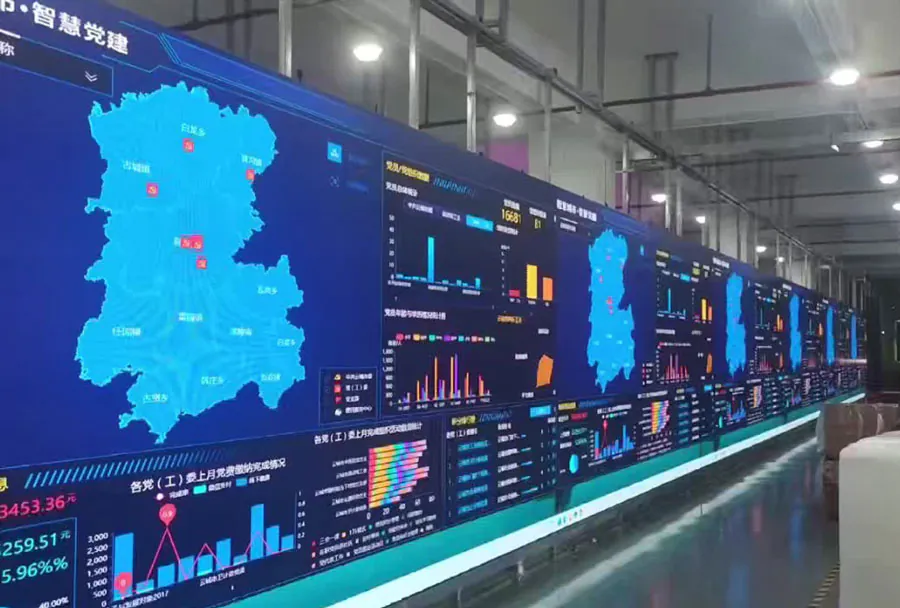
3. Engineer the Complete Installation for Its Environment
Outdoor reliability depends on the complete display assembly, including its structure, connections, drainage, cooling, and maintenance access.
The IEC’s IP-rating guidance explains that the rating classifies enclosure protection against access, solid foreign objects, and water. It does not establish structural capacity, resistance to corrosion, or suitability for every cleaning method.
A specification for Custom-Shaped LED Displays for Theme Parks: Design and Applications should therefore identify which enclosure or component carries each claimed rating. Ask whether the rating remains applicable after cable entries, module replacements, and installation-specific modifications.
Review operating conditions and service access
A common scenario is an entrance display exposed to rain from behind while its front faces a sheltered plaza. Front-face protection alone does not resolve the exposure of power supplies, connectors, or rear service panels.
Your engineering review should address:
– Wind loads on the assembled shape and support system.
– Water paths, drainage, and condensation.
– Operating temperature limits and heat removal.
– Corrosion risks near coastal areas or water attractions.
– Safe access for inspection and component replacement.
Require a qualified structural engineer to evaluate the actual installation under applicable local requirements. Give electrical and facilities teams the same drawings used by the scenic designers.
Environmental planning for Custom-Shaped LED Displays for Theme Parks: Design and Applications must include how the attraction will be serviced after opening.
How to apply this: Create an exposure checklist and require suppliers to document protection, operating limits, and service procedures for the complete proposed assembly.
4. Build the Content Workflow Alongside the Hardware
Custom geometry requires a coordinated content workflow so imagery reaches the correct pixels without unexpected stretching, cropping, or discontinuities.
Disguise provides tools for mapping and playing visual content across display surfaces. Its visualization and mapping capabilities can help teams connect a digital model of the installation with the media intended for it.
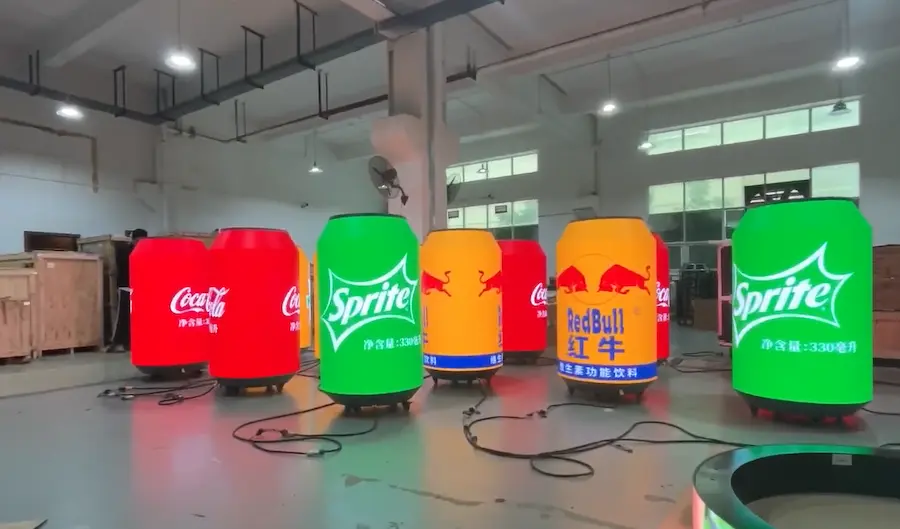
For Custom-Shaped LED Displays for Theme Parks: Design and Applications, establish the content canvas and physical pixel layout before commissioning finished animation. A rectangular video file does not automatically describe how an irregular surface should display it.
Separate the scene from the output map
Keep the creative scene distinct from the mapping that places it on the display. This makes it easier to revise cabinet assignments or output routing without rebuilding every visual asset.
Imagine an animated ribbon wrapping around a tower. The animation needs a deliberate starting point and seam treatment; otherwise, movement may appear to jump where the mapped surface closes.
Request these production deliverables:
– A labeled physical pixel map.
– Content dimensions and orientation.
– Defined seam locations and reserved text areas.
– Color-management and playback settings.
– Test patterns for alignment and output verification.
The content pipeline for Custom-Shaped LED Displays for Theme Parks: Design and Applications should also include an approved fallback image.
How to apply this: Have the supplier and content studio approve the same pixel map, then test an alignment pattern before producing final show media.
5. Protect Readability, Accessibility, and Guest Comfort
Guest-facing displays should communicate clearly without introducing avoidable flashing, glare, or obstacles along circulation routes.
The World Wide Web Consortium’s WCAG guidance on flashing states that web pages must not contain content that flashes “more than three times in any one second period” unless it falls below specified flash thresholds. This is web guidance, so it should inform content review without being presented as a complete compliance standard for physical attractions.
For Custom-Shaped LED Displays for Theme Parks: Design and Applications, review brightness transitions, flashing sequences, and saturated red effects with the people responsible for accessibility and show safety.
Keep essential information dependable
During a queue interruption, a decorative display might switch to operating instructions. Those instructions need a stable background, legible type, and enough display time for guests to understand the message.
Physical placement matters too. The U.S. Access Board’s ADA standards address accessible routes and protruding objects; installations in other jurisdictions require review against their applicable rules.
Treat these as separate checks:
- Ensuring guests can perceive and understand the content.
- Maintaining required physical access throughout the installation.
- Keeping essential information available even if the display fails.
Guest comfort in Custom-Shaped LED Displays for Theme Parks: Design and Applications requires review of both the media and the built environment.
How to apply this: Review representative show sequences and operational messages with your accessibility lead, then inspect the installed display along actual guest routes.
6. Commission the Show and Plan for Component Failure
Commissioning should verify the complete guest experience and establish how operators respond when hardware, playback, or control systems fail.
TouchDesigner is a visual development platform for real-time interactive media. It can combine inputs with generated visuals, but any installation using it still needs documented control logic, defined operating states, and a recovery procedure.
For Custom-Shaped LED Displays for Theme Parks: Design and Applications, distinguish an interactive effect from a safety-critical function. Have qualified control engineers determine the appropriate boundaries and interfaces.
Test failure states as well as normal playback
In an interactive queue wall, a failed tracking input should trigger an approved visual state instead of leaving a frozen image that appears broken. The fallback behavior needs to be designed and tested alongside the main effect.
Your commissioning checklist should include:
– Correct pixel mapping and cabinet orientation.
– Color and brightness consistency.
– Playback continuity and synchronization.
– Recovery after power or signal interruption.
– Replacement-module configuration.
– Operator access to status information.
Record which settings operators can change and which require technical support. Keep configuration backups and an approved reference image so maintenance teams can compare performance after repairs.
Acceptance of Custom-Shaped LED Displays for Theme Parks: Design and Applications should cover normal operation, fault behavior, and handover documentation.
How to apply this: Run a witnessed commissioning session that includes controlled signal loss, recovery, and a demonstration of the documented maintenance workflow.
7. Why to choose TW VISION to produce your custom-Shaped LED Displays
Architectural Integration and Environmental Storytelling
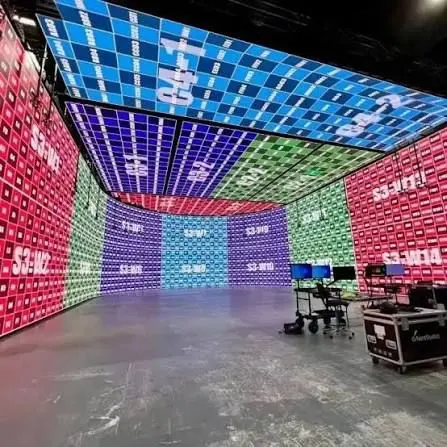
The primary innovation of custom-shaped LED technology lies in its flexibility. TW VISION screens can be fabricated to fit curved surfaces, wrap around structures, form portals, or mimic organic shapes like trees, magical crystals, or rippling water. This capability allows for “Environmental Storytelling” at an unprecedented scale.
For instance, the entrance to a mythical kingdom is no longer just a gate; it can be a towering, irregularly shaped archway of LED “stone” that comes to life as guests approach. Animated runes glow, mythical creatures peer out, and the archway itself appears to breathe, setting the narrative tone before a single ride is boarded. In a sci-fi zone, facades of buildings become vast, non-rectangular data displays, streaming alien code and holographic advertisements that make the environment feel lived-in and authentic. This seamless integration builds authoritativeness for the park’s brand by showcasing a high-fidelity commitment to its themed worlds, making the fantasy tangible and believable.
Character Interaction and Responsive Narratives
Interactivity is the cornerstone of modern entertainment. Custom-shaped LEDs enable direct, responsive interactions between guests and digital characters or elements. Imagine a “magic mirror” in a fairy-tale forest—a screen shaped like an ancient, gilded mirror. As children stand before it, computer vision technology allows a friendly digital fairy or a mischievous goblin inside the mirror to react to their movements, talk to them by name (integrated with wearable tech), and even play simple games like “follow-my-lead.”
Similarly, in an underwater adventure area, a massive, undulating LED “kelp forest” could respond to touch. When guests interact with sensor-equipped panels, the LED kelp might light up in patterns, reveal hidden sea creatures, or trigger a synchronized light and sound show. This application demonstrates deep expertise in blending hardware (custom screens, sensors) with sophisticated software (real-time rendering, AI-driven character animation) to create magical moments that feel personal and spontaneous, significantly boosting perceived value and guest satisfaction.
Gamification and Park-Wide Adventure Platforms
Theme parks are increasingly adopting park-wide gaming systems where guests complete missions using smartphones or RFID-enabled devices. Custom-shaped LED screens serve as the grand, physical hubs and scoreboards for these adventures. A screen shaped like a pirate’s treasure map in the center of a port can update in real-time, showing which teams are leading in a scavenger hunt, displaying clues, or animating to celebrate when a team unlocks a major achievement.
Furthermore, these screens can become the game itself. A large, circular LED “alchemy table” might challenge guests to work together, touching different runic segments in the correct sequence (guided by a story) to “brew a potion,” resulting in a spectacular visual effect. This gamification leverages the experience of social play and achievement, encouraging exploration and repeat visitation. The reliability and visual impact of TW VISION’s technology ensure these critical interactive nodes function flawlessly under heavy use, building trust with both operators and guests.
Personalized Shows and Dynamic Attraction Queues
The dreaded queue is being reimagined as a pre-show entertainment space. Custom-shaped screens here are transformative. In a superhero ride queue, screens shaped like shattered glass or energy fields can display personalized content. Using data from a park app or wearable, screens might welcome a guest by name, display their chosen superhero emblem, or integrate them into a brief, pre-rendered scene where they are “scanned” for a mission.
For nighttime spectaculars, screens with unique contours—like a mountain range silhouette or a castle’s spires—can form part of the show’s canvas. More innovatively, they can enable audience participation. Screens shaped like floating lanterns or constellations could change color or pattern based on real-time input from the audience’s phones, making each show slightly unique and giving guests a direct sense of agency in a large-scale production. This personalization is a powerful tool for creating memorable, shareable moments, directly contributing to positive word-of-mouth and brand loyalty.
The Future of Immersive Entertainment
The applications of TW VISION Custom Shape LED Screens represent more than a technological upgrade; they signify a shift in thematic design philosophy. By moving beyond the rectangle, these screens become organic components of the storyscape. They empower creators to build worlds where the environment is alive, characters are responsive, and every guest can become a co-author of their own adventure.
For theme park operators, investing in such innovative technology is a demonstration of industry leadership and a commitment to EEAT. It showcases expertise in cutting-edge guest experience design, builds authoritativeness as a pioneer in immersive entertainment, earns the trust of visitors through reliable and awe-inspiring applications, and is fundamentally rooted in creating unparalleled, magical experiences. As the demand for deeper immersion grows, custom-shaped interactive LED screens will undoubtedly become a standard, yet endlessly versatile, tool in the theme park designer’s kit, shaping the unforgettable memories of tomorrow.
Frequently Asked Questions About Custom-Shaped LED Displays for Theme Parks: Design and Applications
Unusual operating conditions require decisions that go beyond the standard design and commissioning workflow.
How do you film a custom LED display without visible bands?
Visible bands can result from the interaction between camera exposure, sensor readout, and display refresh behavior. For Custom-Shaped LED Displays for Theme Parks: Design and Applications, test the intended cameras and recording settings with the actual display processor. A surface that looks stable to visitors may still show artifacts in promotional footage.
If filming is frequent, include camera compatibility in procurement and request a demonstration using your production equipment.
Can a custom LED installation move with an animatronic?
Yes, provided the moving assembly is engineered for its added mass, changing loads, cable movement, and maintenance requirements. Custom-Shaped LED Displays for Theme Parks: Design and Applications involving animatronics need coordination between display and motion-system specialists. A screen mounted on a rotating scenic element creates different demands from a stationary wall.
Require the motion supplier to approve mounting interfaces and cable routing, and verify behavior throughout the permitted travel.
Who should own the source files for themed LED content?
Your contract should explicitly define ownership and delivery rights for project files, media assets, mappings, and configuration backups. In Custom-Shaped LED Displays for Theme Parks: Design and Applications, receiving rendered video alone may prevent future editing. A licensed character attraction can introduce restrictions on artwork reuse or modifications.
Ask legal and creative teams to distinguish assets your park owns from licensed material, and document what a replacement studio may access.
When is projection a better choice than a custom LED surface?
Projection may suit a large scenic surface when concealment, surface texture, and controlled ambient light matter more than the display’s own light output. Compare it with Custom-Shaped LED Displays for Theme Parks: Design and Applications using an on-site mock-up. A dark indoor façade may support projection effectively, while guest shadows or limited projector positions complicate the choice.
Evaluate the full optical path and maintenance access before selecting either technology.
What should you do when the original LED modules are discontinued?
Maintain a documented replacement strategy rather than assuming future modules will match the original installation. For Custom-Shaped LED Displays for Theme Parks: Design and Applications, a physically compatible replacement may differ in color, brightness, or electronics. If a supplier discontinues a product, replacing an entire visible segment may produce a more consistent result than mixing modules.
Specify spare-part availability, compatibility documentation, and an agreed process for evaluating substitute components.
Conclusion
Custom-Shaped LED Displays for Theme Parks: Design and Applications works best when creative design, engineering, content production, and operations share a clear specification. The shape should serve the attraction, while the technical requirements should reflect actual viewing positions and operating conditions.
Carry these priorities into your project brief:
– Design a maintainable shape: Identify module boundaries, support points, and access before fabrication.
– Validate the guest experience: Test real content under representative lighting and from intended sightlines.
– Specify the complete assembly: Document environmental protection, structural requirements, and electrical interfaces.
– Prepare for daily operation: Approve fallback visuals, configuration backups, and component replacement procedures.
Your next step is to assemble a concept drawing, viewing-position plan, environmental checklist, and representative media package. Use those materials to request a supplier demonstration and an engineering review before committing to production.
Related Articles