TW VISION Bendable Screen For Retail And Commercial Spaces

Bendable displays represent a significant evolution in visual merchandising and environmental design. TW VISION‘s Bendable Screen for retail and commercial spaces combines flexible form factors with high-resolution image quality, creating dynamic visual experiences that traditional rigid screens cannot match. As retail and commercial environments compete for attention in an increasingly crowded sensory landscape, the capacity to adapt screen shape, wrap around columns, or conform to curved architectural elements unlocks new opportunities for brand storytelling, customer engagement, and efficient space utilization.
This article provides an in-depth look at the TW VISION Bendable Screen, exploring technical capabilities, design and installation considerations, content strategy, business impact, and maintenance. It is written for digital signage integrators, retail and commercial designers, brand marketers, and facilities managers seeking a comprehensive, practical guide to deploying bendable display technology.
Technical Features and Performance
Display Technology and Image Quality
TW VISION’s Bendable Screen typically utilizes flexible LED modules or OLED-like architectures that enable curvature without sacrificing pixel density. These screens achieve high brightness levels suitable for well-lit retail environments, with color gamut and contrast designed to maintain visual impact from a range of viewing distances. Key technical considerations include pixel pitch (impacting viewing distance and perceived resolution), brightness (nits), color calibration, and refresh rates to avoid flicker in video content or changes under ambient lighting.
Mechanical Flexibility and Durability
A defining feature is the screen’s minimum bend radius — how tightly the display can curve without damage. TW VISION focuses on materials and modular designs that allow repeatable bending during installation while maintaining structural integrity. Durable protective coatings and impact-resistant layers help the screens withstand public use and environmental stressors. Additionally, seams and module joins are engineered to be visually smooth, minimizing bezel effects that could break immersion.
Control, Connectivity, and Integration
Modern bendable displays support versatile connectivity options including HDMI, DisplayPort, and networked media players with content management systems (CMS). TW VISION units commonly integrate with standard digital signage ecosystems and provide APIs or built-in players for scheduling, remote monitoring, and diagnostics. Proper integration enables synchronized multi-screen layouts, sensor-driven content triggers, and centralized device management.
Design and Installation Considerations
Site Survey and Architectural Integration
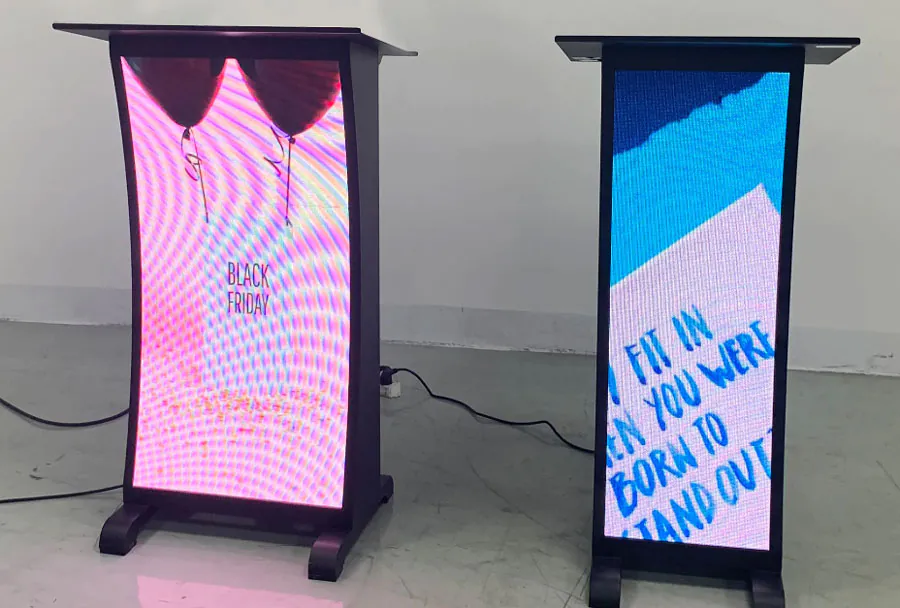
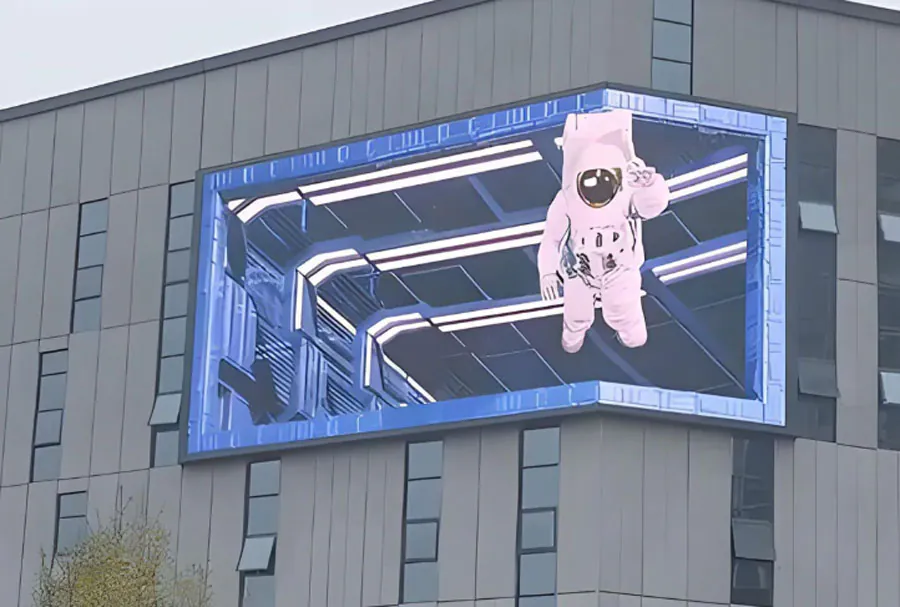
Successful deployments begin with a thorough site survey. Measure curvature profiles, consider sightlines, and assess mounting surfaces. TW VISION’s screens can be mounted on curved walls, wrapped around columns, or formed into wave-like installations. Coordination with architects and structural engineers is essential to ensure mountings can support both the screen weight and any dynamic loads. Electrical access, cooling, and cable routing must also be planned to maintain a clean, professional aesthetic.
Mounting Systems and Frames
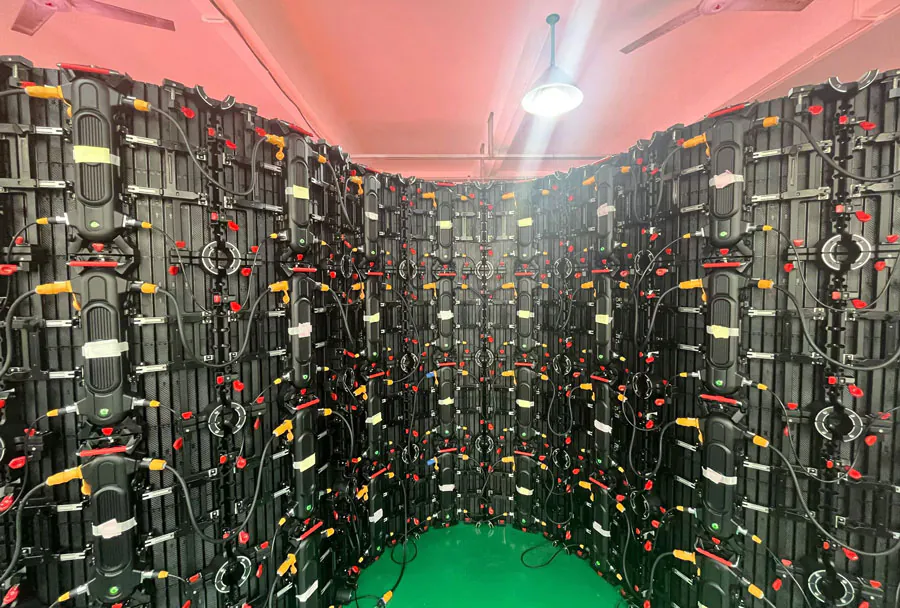
Custom frames and flexible mounting rails are often necessary. TW VISION offers modular mounting systems that allow installers to adjust tension and curvature during installation. These systems typically include adjustable brackets, tensioning straps, and modular backplanes to secure LED modules. Considerations include ease of future access for servicing and the ability to replace individual modules without full disassembly.
Environmental and Safety Requirements
Retail environments require displays to meet fire codes, HVAC considerations, and safety standards for public spaces. TW VISION devices should be specified according to local electrical and building regulations. Additionally, ventilation and thermal management strategies prevent premature component aging from heat, especially in high-brightness installations.
Content Strategy for Curved Surfaces
Designing for Curvature and Viewing Angles
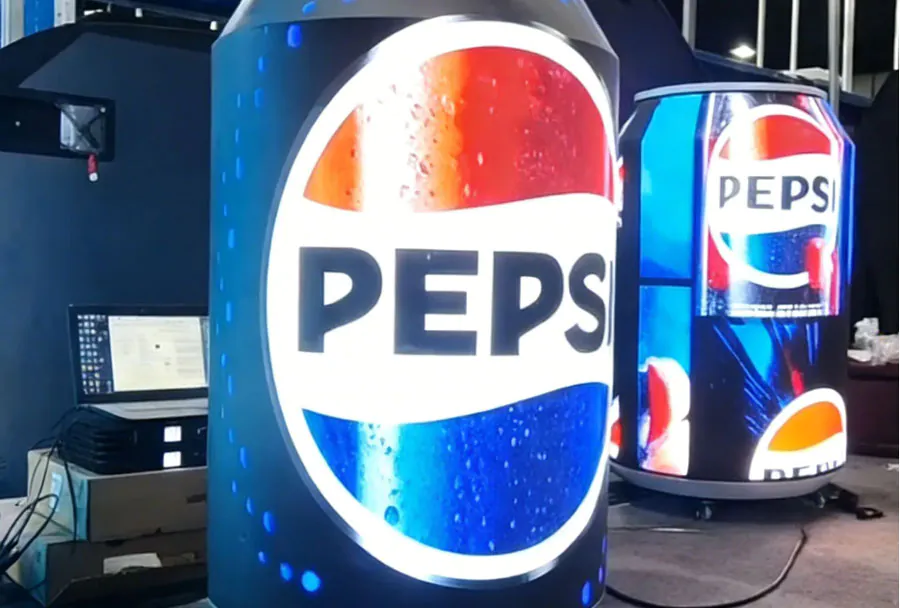
Content must be created with the display shape in mind. Flat-layout assets can appear distorted when wrapped; therefore, designers should create content specifically for curved canvases using 3D modeling or projection-mapping techniques. Consider the primary viewing zones and prioritize critical information (text, logos, offers) within those sightlines. Motion graphics that flow with the curvature enhance the immersive experience and reduce cognitive friction.

Interactive and Sensor-Driven Experiences
Bendable displays work well with proximity sensors, touch overlays, and mobile integrations. TW VISION screens can act as interactive wayfinding walls, product explorers, or social media walls that react to customer presence. Interaction design must consider ergonomics — touch points should be reachable and visible on a curved surface, and latency minimized to preserve natural interactions.
Scheduling and Dynamic Content
For commercial spaces, content scheduling is imperative. A robust CMS allows different content for time of day, promotions, and events. TW VISION screens can present promotional loops during peak hours and switch to informational or brand storytelling content when traffic is lower, maximizing relevance and visitor experience without additional staff intervention.
Use Cases and Industry Applications
Retail Flagship Stores and Window Displays
In flagship retail stores, bendable screens create striking storefront displays and immersive in-store environments. Their ability to wrap around fixtures or create seamless panoramic backdrops enhances product launches and seasonal campaigns. Designers often use them for dynamic window installations that capture passerby attention, turning pedestrian traffic into store visits.
Hospitality, Lobbies, and Wayfinding
Hotels and corporate lobbies use bendable screens to humanize interiors, provide interactive directories, and deliver digital art. The screens can conform to curved walls or sculptural elements to reinforce brand aesthetics and improve guest navigation. They are particularly effective where traditional signage would clash with interior design.
Exhibitions, Museums, and Experience Centers
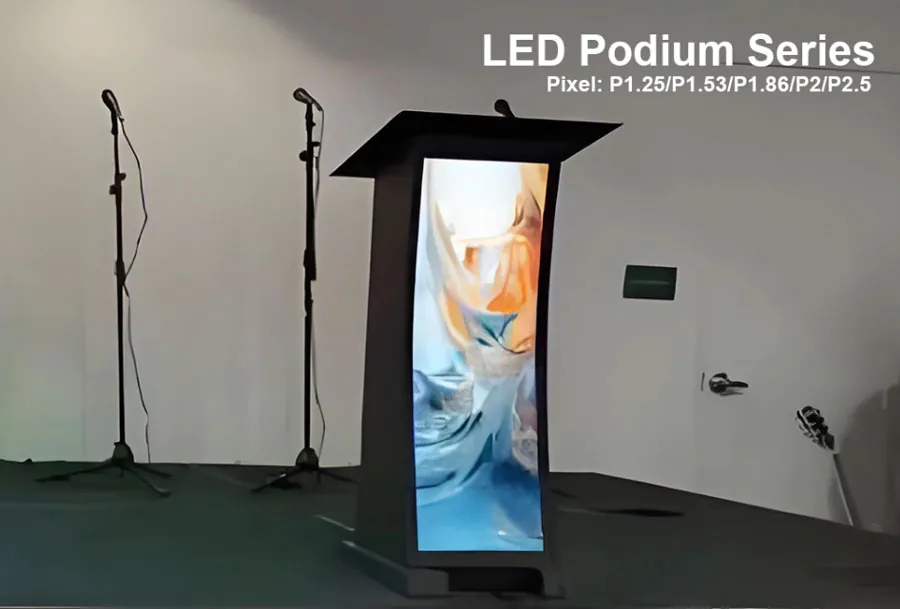
Museums and exhibit designers deploy bendable screens to create convincing environmental storytelling, wrap content around exhibit pillars, or construct curved interactive kiosks. The flexibility allows creators to blur the boundary between physical artifacts and digital narratives, enhancing visitor engagement and retention.
ROI, Business Impact, and Measurement
Impact on Sales and Customer Engagement
Bendable displays can directly impact sales by highlighting promotions, improving product discoverability, and increasing dwell time. Retailers often see uplift in attention and conversion when using dynamic content versus static signage. Measuring lift requires A/B testing with control groups, monitoring foot traffic, and tracking sales before and after deployments.
Cost Considerations and Total Cost of Ownership (TCO)
Initial costs include hardware, custom framing, installation, and content production. TW VISION’s modular approach can reduce long-term TCO by allowing module-level replacements and remote diagnostics that minimize service calls. Consider long-term benefits such as reduced print signage costs, centralized content management efficiencies, and potential increases in revenue per square foot.
Analytics and KPIs
Key performance indicators include impressions (footfall facing the screen), engagement (dwell time, interaction rates), conversion rate lift, and content performance metrics. Integrating camera analytics (privacy-compliant) and POS data helps quantify ROI. TW VISION devices usually support telemetry for uptime and brightness-level tracking, aiding operational analytics.
Maintenance, Lifecycle, and Support
Routine Maintenance Practices
Routine maintenance includes cleaning the display surface with manufacturer-approved materials, inspecting mounting integrity, and verifying thermal management systems. Regularly scheduled firmware and CMS updates ensure security and feature parity.
Serviceability and Repairs
TW VISION’s modular designs reduce mean time to repair by allowing technicians to swap individual modules. Keep an inventory of spare modules for mission-critical locations. Ensure service contracts define response times, remote troubleshooting capabilities, and replacement logistics.
Warranty and End-of-Life Considerations
Understand warranty coverage for pixel failure, brightness degradation, and mechanical failures. Plan for technology refresh cycles — typically every 5–8 years depending on usage and visual requirements. Recycling and responsible disposal policies should be part of lifecycle planning.
Competitive Positioning and Market Trends
How TW VISION Compares
TW VISION competes on flexibility, image quality, and integration support. Compared to rigid LED walls, bendable solutions offer unique form factors and experiential advantages. Evaluate vendor strengths in supply chain reliability, global support network, and customization capabilities. TW VISION’s emphasis on module-level engineering and CMS compatibility positions it as a strong contender for large-scale and bespoke projects.

Emerging Trends to Watch
Look for improvements in pixel densities enabling closer viewing distances, thinner profiles improving thermal performance, and advances in AI-driven content personalization. Augmented reality (AR) integrations and mobile-triggered content are increasing the utility of physical displays as part of omnichannel strategies.
Implementation Checklist: From Concept to Launch
– Conduct a comprehensive site survey including curvature mapping and sightline analysis.
– Define content strategy with mockups for the actual curved canvases.
– Choose pixel pitch and brightness targets based on viewing distances and ambient light.
– Coordinate with structural and MEP (mechanical, electrical, plumbing) teams for mountings and power.
– Build or procure mounting frames and modular backplanes optimized for maintenance access.
– Integrate CMS and test scheduling, interactive triggers, and remote monitoring.
– Run a pilot installation to evaluate viewing experience and operational parameters.
– Train staff on basic maintenance, content uploading, and emergency procedures.
Analysis Table
| Feature/Attribute | Benefit | Typical Use Case | Installation Complexity | Estimated Cost Range |
|---|---|---|---|---|
| Minimum Bend Radius | Enables tighter curves and creative shapes | Column wraps, tight-window displays | High — requires custom frames and precise mounting | $$$ (Varies by radius and size) |
| Pixel Pitch (e.g., 1.9mm – 3.9mm) | Determines perceived resolution at viewing distance | Flagship retail, near-view merchandising | Medium — selection impacts cabinet layout | $$ – $$$ (Higher for finer pitch) |
| Brightness (nits) | Ensures visibility in bright ambient light | Storefront windows, atriums | Low — specification choice; may need advanced cooling | $ – $$ (Depends on peak nits) |
| Modular Design | Ease of repair and scalability | Large-format seamless installations | Medium — designed for field serviceability | $$ (Premium for modularity) |
| CMS & Connectivity | Remote management, scheduling, analytics | Networked retail rollouts | Medium — integration with existing systems | $ – $$ (Subscription/licensing costs) |
Best Practices and Design Recommendations
Start with Content, Not Just Hardware
Prioritize content strategy parallel to hardware selection. Early content prototypes reduce rework and ensure that the chosen pixel pitch and curvature will support the intended creative.
Consider Accessibility and Inclusivity
Ensure text size and contrast are legible for all visitors. Interactive elements must conform to accessibility guidelines; implement alternative ways to retrieve information for those unable to interact with the display.
Plan for Redundancy and Remote Management
Use remote monitoring to detect failures before they become visible to customers. Redundancy in critical locations (such as multiple parallel display feeds) preserves messaging continuity during maintenance.
Strategic Value of TW VISION Bendable Screens
TW VISION Bendable Screens enable retailers and commercial operators to reimagine visual environments. Their flexibility in form factor, combined with high image quality and modern CMS integration, supports immersive brand experiences and measurable business outcomes. Effective deployments hinge on early coordination between design, technical, and operational stakeholders — from selecting pixel pitch based on viewing distance to engineering custom mounts that meet safety and serviceability requirements.
When specified and executed thoughtfully, bendable displays move beyond novelty to become strategic assets: they increase attention, enhance customer experience, and provide measurable returns through increased engagement and conversion. For brands and properties investing in experiential differentiation, TW VISION’s bendable solutions offer a compelling path to transform spaces and tell richer stories in the physical world.