TW VISION Flexible LED Display Complete Guide for Creative Installations

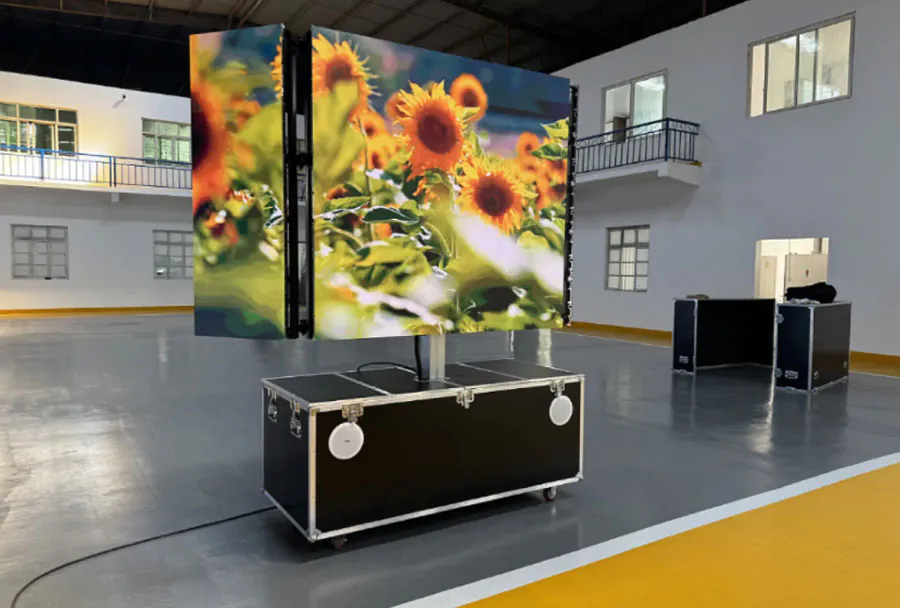
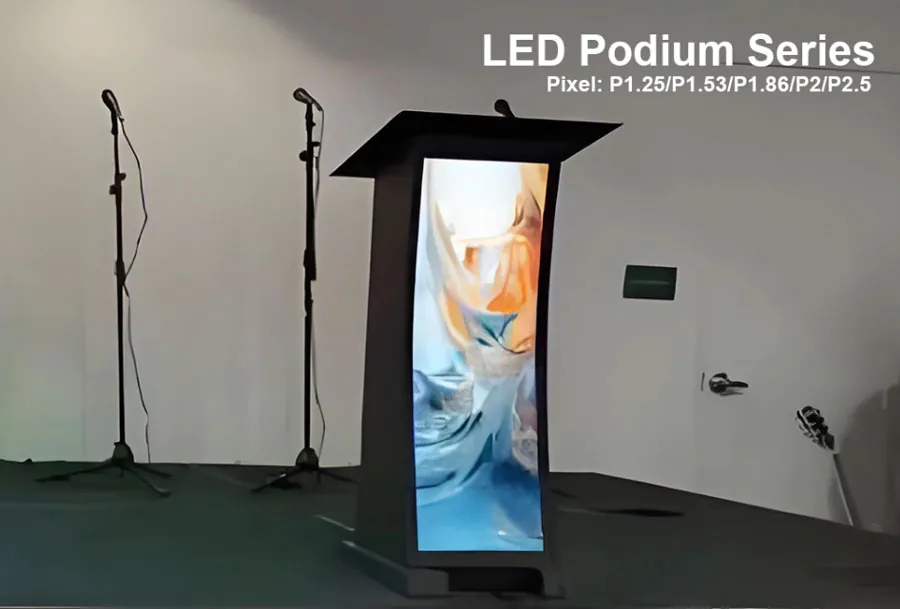
flexible led displays have transformed the way designers, architects, and event producers think about visual media. TW VISION’s line of flexible LED panels brings that transformation into sharper focus by delivering lightweight, bendable, high-resolution screens that conform to non-traditional shapes and surfaces. This guide covers the technical foundations, design best practices, installation methods, content strategies, maintenance tips, and ROI considerations for creative professionals interested in integrating TW VISION flexible LED displays into retail, experiential marketing, stage design, public art, and architectural fa?ades.
Understanding the product capabilities and practical constraints is critical to achieving a reliable, high-impact installation. Whether you are planning a curved retail fa?ade, a wraparound stage backdrop, or an interior sculptural element, the characteristics of TW VISION flexible LED modules—pixel pitch, bending radius, transparency, weight, and control options—will shape the design choices and outcome.
What is TW VISION Flexible LED Display?
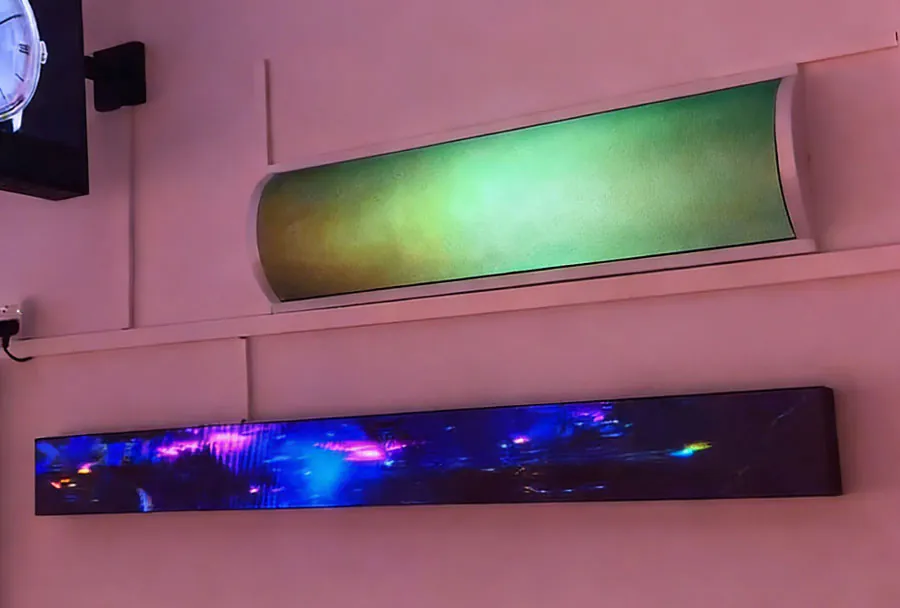
TW VISION flexible LED displays are modular LED panels engineered to bend, roll, or drape without compromising pixel integrity. Unlike rigid cabinets, flexible displays use soft PCB or segmented modules that allow curvature both horizontally and vertically. These products typically come in various pixel pitches (P1.2, P1.5, P1.9, P2.5, P3.9, etc.), brightness classes (for indoor and outdoor applications), and with options for transparency and waterproofing.
Key components include:
– Flexible LED modules: the front-end pixel matrix.
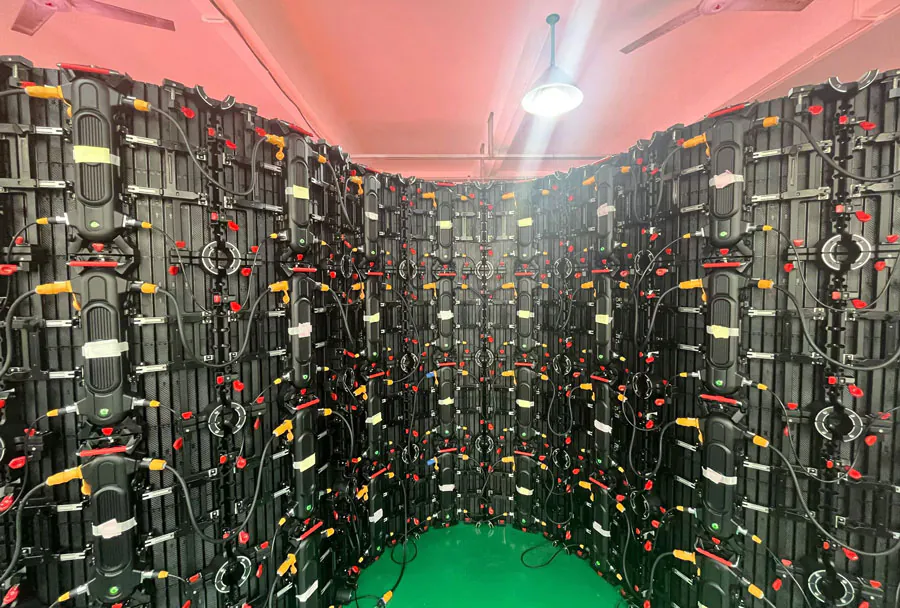
– Flexible power and signal distribution: cables or flexible backplanes designed for movement.
– Controller and receiving cards: for mapping and driving pixels.
– Mounting framework: custom or semi-standard structures that preserve the bending radius and protect the electronics.
TW VISION’s flexible displays are often chosen for their aesthetic adaptability—ability to create fluid forms—while maintaining high visual performance in color fidelity, refresh rates, and brightness control.
Key Features and Advantages
When selecting a flexible LED display for creative installation, it helps to know the primary strengths TW VISION markets and refines:
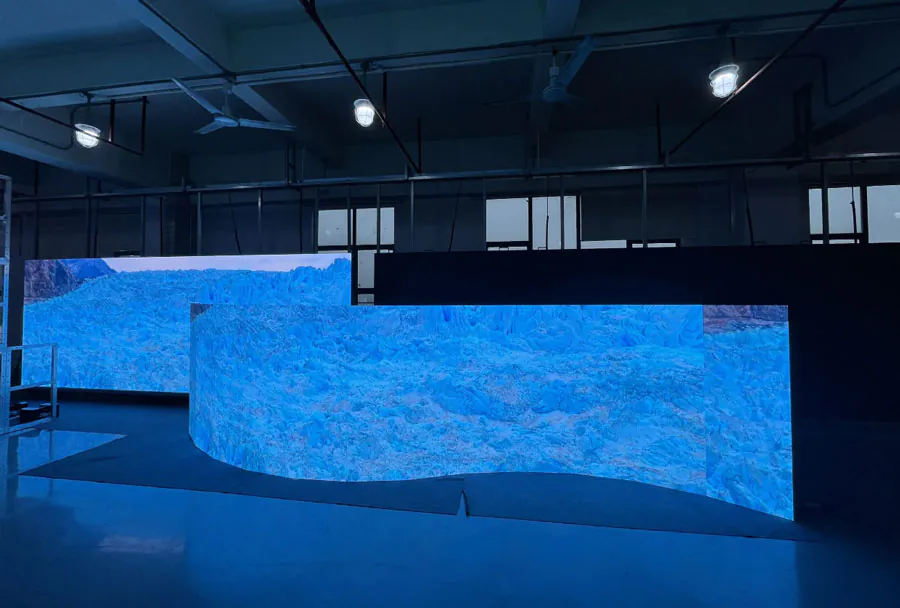
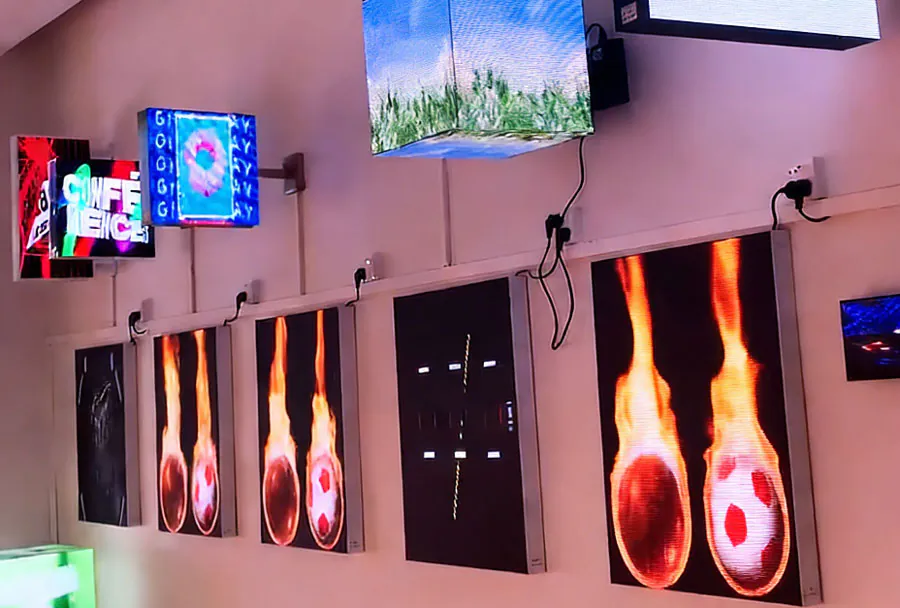
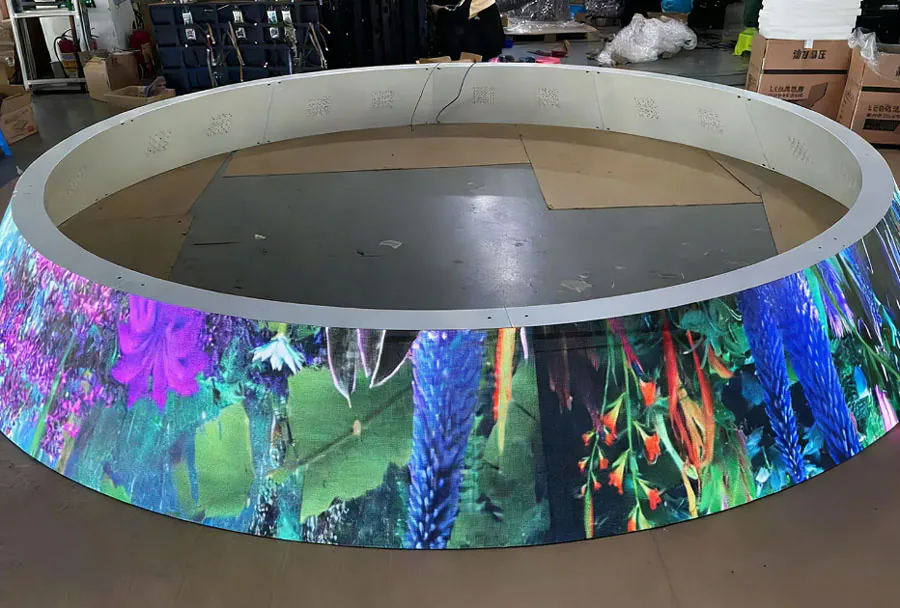
– Flexibility and form factor: Panels can be curved, wrapped, or hung, enabling 3D shapes, cylindrical columns, and draped backdrops.
– Lightweight construction: Lower load on structures and simpler rigging compared to traditional cabinets.
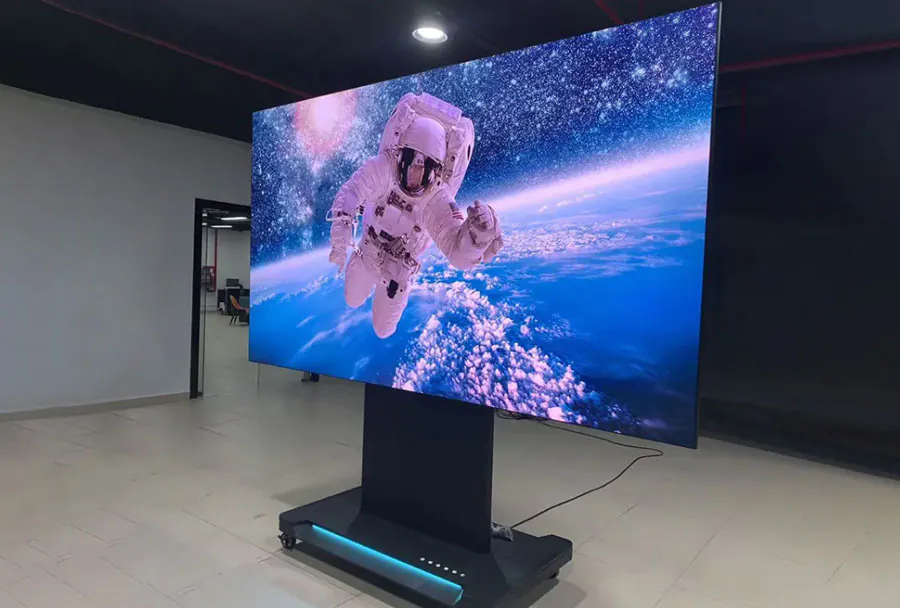
– High pixel density options: Small pixel pitches for close-view indoor installations deliver crisp imagery.
– High brightness and contrast: Suitable for both dim environments and brightly lit retail or outdoor contexts (depending on product variant).
– Transparency variants: Allow natural light and sightlines through the display for fa?ades and indoor overlays.
– Seamless visual flow: Minimal bezels and careful module alignment reduce visible seams in curved installations.
– Modular repairability: Defective modules can be replaced without major cabinet disassembly.
– Energy efficiency: Compared to older large-format displays, modern flexible LEDs can be optimized for lower power per area.
Considerations: Flexibility introduces constraints around minimum bending radii, cable strain relief, and environmental sealing. Careful design and installation ensure longevity and appearance.
Technical Analysis Table
| Parameter | Typical Specification | Impact on Design | Recommended Use | Notes |
|---|---|---|---|---|
| Pixel Pitch | P1.2 – P3.9 | Determines viewing distance and image clarity | Indoor close-view: P1.2–P1.9; Large distance: P2.5–P3.9 | Choose smallest pitch affordable for target viewing distance |
| Minimum Bending Radius | Flat to ~150 mm radius (product-dependent) | Limits curvature tightness and structural design | Gentle curves, cylinders with planned radius | Confirm with TW VISION datasheet per model |
| Brightness | 600–6000 nits (indoor/outdoor variants) | Affects visibility in ambient light | Indoor: 600–1200 nits; Outdoor: 3000–6000 nits | High brightness increases power draw and heat |
| Transparency | 0%–60% | Influences light and sight-through properties | Fa?ades, shopfronts, atria | Higher transparency can reduce pixel density |
| Ingress Protection | IP20–IP67 (model-specific) | Dictates indoor/outdoor suitability | Outdoor/wet areas need IP65+ | Sealing solutions may be required for outdoor curves |
| Weight per m2 | 5–20 kg/m2 | Affects structure and mounting design | Lightweight installations reduce structural cost | Always factor dynamic loads for hanging installations |

Design Considerations for Creative Installations
Successful design begins with reconciling creative ambition with physical limits. Key considerations include:
– Bending Radius and Panel Orientation: Never force modules beyond the minimum bending radius specified in TW VISION datasheets. Both vertical and horizontal bends may be possible but verify directional restrictions.
– Structuring and Backing: For draped or suspended displays, create a supportive yet discreet framework. Lightweight aluminum frames or flexible formers help maintain shape while enabling service access.
– Seam Planning: Overlap and interlock strategies reduce visible seams. Plan module seams to align with natural design lines or mask them with content.
– Thermal Management: High brightness levels generate heat. Ensure airflow or thermal pathways; for enclosed installations, account for ventilation or active cooling.
– Power Distribution: Flexible displays may use distributed power points. Map power drops and minimize long runs to avoid voltage drop; use recommended busbars, power supplies, and redundancy for critical installs.
– Signal Integrity: High-resolution content requires robust signal distribution—consider fiber or high-quality CAT6/7 with extenders and buffering. For complex shapes, pixel mapping must be planned early.
– Structural Load and Safety: Determine static and dynamic loads, using factors of safety for hanging elements. Bring in structural engineers for large fa?ades or overhead installations.
– Environmental Protection: For outdoor or semi-outdoor installations, use IP-rated modules, proper sealing at seams, and UV-resistant materials.
Installation Methods and Best Practices
TW VISION flexible LED installations demand attention to mechanical and electrical best practices:
– Pre-install Planning: Produce a detailed installation plan, including CAD drawings, cable runs, power locations, and service access points. Mockups or small-scale prototypes help validate curvature and visual impact.
– Surface Preparation: Ensure the substrate is smooth, stable, and able to carry the intended load. For adhesive-mounted panels, confirm compatibility and cure times.
– Mounting Techniques: Use purpose-built brackets, hook-and-loop systems, or custom tracks. For cylindrical installations, use segmented rings. Avoid sharp bends and provide strain relief for all cable connections.
– Grounding and Bonding: Reliable grounding reduces electrical noise and improves safety. Bond metal frames and ensure consistent grounding across modules.
– Service Access: Design for modular replacement. Have access panels, hinge points, or removable sections for maintenance and repairs.
– Calibration and Color Matching: After physical installation, perform color calibration across all modules to ensure uniformity. TW VISION or certified partners typically provide calibration tools and procedures.
– Testing and Commissioning: Run burn-in tests, check refresh rates, pixel mapping, brightness uniformity, and emergency shutdown systems. Validate content playback on the actual curved surface.
Content Strategy for Flexible Displays
Content is the soul of any installation. Flexible displays introduce visual challenges—distortion, varying viewing distances, and seam visibility—that require a thoughtful content strategy.
– Content Mapping: Use the display controller’s mapping tools to align pixels with the physical surface. For irregular surfaces, mesh-warping and 3D projection mapping tools correct distortion.
– Design for Curvature: Avoid thin type or tight graphics that wrap awkwardly around curves. Use larger type weights and spatial composition that flows with the shape.
– Viewing Distance and Resolution: Tailor detail level to the closest expected viewer. For close viewing (e.g., interactive installations), prefer higher pixel density and simpler, high-contrast imagery.

– Motion and Transitions: Motion can help mask seams and create immersive impressions. However, avoid fast horizontal movement that may create motion blur on LED seams or when viewers are close.
– Brightness and Night Modes: Implement dynamic brightness profiles or content that adjusts with ambient light to extend component life and improve viewer comfort.
– Interactivity: Consider integrating sensors, touch-capable overlays, or camera-based interactivity. Plan for latency, durability, and maintenance of interactive elements.
Case Studies and Creative Applications
TW VISION flexible LED panels are used in many creative contexts. Notable applications include:
– Retail Fa?ades: Curved, semi-transparent LED curtains across storefronts that blend display with daylight.
– Museum and Gallery Installations: Sculptural media walls that react to visitor movement.
– Stages and Theatrical Sets: Draped backdrops and wraparound projection surfaces for immersive stagecraft, allowing rapid reconfiguration.
– Hospitality and Lobby Art: LED columns and flowing walls that change mood and provide wayfinding.
– Outdoor Public Art: Weather-sealed cylindrical displays or wrapped architectural details that animate plazas and transit hubs.
Each application benefits from early collaboration with TW VISION technical teams or certified integrators to align creative intent with practical constraints.
Maintenance, Reliability, and Lifecycle
Maintaining high uptime and appearance requires a plan:
– Routine Cleaning: Use recommended solvents and soft cloths. Avoid abrasive cleaning on delicate pixel surfaces.
– Firmware Updates: Keep controllers and receiving cards updated to preserve compatibility and security.
– Spare Parts and Inventory: Stock essential spares—modules, power supplies, connectors—especially for large or critical installations.
– Environmental Monitoring: For enclosed installations, track temperature and humidity to avoid premature failures.
– Expected Lifespan: With proper operation and maintenance, LEDs often provide 50,000–100,000 hours of useful life, but power supplies and electronics may require replacement sooner.
– Warranty and Support: Understand TW VISION’s warranty terms and ensure a service contract for high-value or high-traffic installations.
Cost Considerations and ROI
Costs for flexible LED installations vary widely depending on pixel pitch, brightness, installation complexity, and supporting infrastructure. Consider these elements when calculating ROI:
– Capital Expenditure: Product cost per square meter is driven by pixel pitch and brightness class. Smaller pitch and higher brightness cost more.
– Installation Costs: Custom frameworks, structural engineering, mounting systems, and labor can exceed the product cost for complex shapes.
– Operating Costs: Power consumption varies by brightness and duty cycle. Factor in energy and cooling for indoor high-brightness applications.
– Content and Software: High-quality content creation, mapping, and licensing are ongoing costs that influence perceived value.
– Revenue and Value: In retail and experiential cases, increased dwell time, higher conversion, and sponsorship opportunities can justify investment. For public venues, branding value and visitor engagement are measurable benefits.
A clear KPI-driven approach—defining expected outcomes like foot traffic uplift or ticket sales—helps justify the investment.
Choosing the Right TW VISION Product
To choose the right TW VISION flexible LED product, evaluate the following:
– Intended viewing distance and environment (indoor vs outdoor).
– Desired curvature and installation geometry.
– Transparency needs and whether natural light or sightlines must be preserved.
– Brightness requirements for ambient lighting conditions.
– Mounting constraints and access for servicing.
– Budget and total cost of ownership, including installation and content creation.
Engage TW VISION reps or authorized integrators early. They can provide datasheets, mechanical drawings, sample modules, and simulation tools to validate design concepts.
Conclusion and Recommendations
TW VISION flexible LED displays unlock creative possibilities that rigid displays cannot match—enabling designers to sculpt light and motion into architecture, retail environments, stages, and public art. However, realizing these possibilities requires technical discipline: respecting bending radii, planning power and signal distribution, and designing content that complements curved geometry.
Practical recommendations:
– Start with a prototype or mockup to validate curvature, seams, and content look.
– Specify pixel pitch based on closest viewing distance, not just budget.

– Build serviceability into the mechanical design from day one.
– Use calibrated color management and post-install commissioning to ensure visual consistency.
– Plan for long-term maintenance, spare parts, and firmware updates.
When planned and executed well, TW VISION flexible LED installations deliver compelling visual experiences that engage audiences and elevate spaces. For complex or large-scale projects, partner with experienced integrators and consult TW VISION’s technical resources to align creative ambitions with robust, maintainable system design.