High Quality Indoor LED Screen Rental with Installation Support

The market for indoor LED screens has matured rapidly. High-resolution panels with fine pixel pitches are now viable for corporate events, conferences, retail activations, trade shows, museums, and high-end hospitality environments. For many organizations, renting an indoor LED screen with professional installation support is the most practical, cost-effective route. Rental eliminates the upfront capital expenditure, reduces long-term maintenance responsibility, and provides access to the latest hardware and experienced technical crews. This article explores what constitutes a high-quality indoor LED screen rental, the installation support you should expect, and how to evaluate providers to ensure a successful event or installation.
Defining “High Quality” for Indoor LED Screens
High quality in indoor LED screens is defined by several measurable attributes:
– Pixel pitch (P1.2 to P3.9 for indoor applications) determines viewing distance and image sharpness.
– Brightness (typically 800–1500 nits for indoor use) ensures clarity without causing eye strain in controlled lighting.
– Refresh rate (≥3840 Hz) prevents flicker on camera and improves motion reproduction.
– Color accuracy and uniformity allow faithful reproduction of branding and live video.
– Seamlessness and calibration across modules reduce visible borders and color shifts.
– Reliability metrics like MTBF (mean time between failures), warranty, and redundancy for mission-critical events.
A truly high-quality rental package pairs these hardware attributes with professional services: site survey, system design, structural and rigging plans, power and data management, content optimization, live support during the event, and post-event de-rigging.
Key Technical Specifications to Evaluate
When comparing rental offers, assess both the technical specs and how the rental provider supports them in practice:
– Pixel Pitch: For close-up viewing (conference rooms, retail) aim for P1.2–P2.5. For larger halls or stages where audience distance is greater, P2.6–P3.9 is typical.
– Brightness: Indoor brightness of 800–1500 nits provides enough punch while avoiding glare.
– Contrast Ratio: Higher is better for depth; look for panels with strong black levels and high dynamic range handling.
– Refresh Rate & Scan Technology: For events with cameras (streaming or broadcast), choose panels with high refresh rates (≥3840 Hz) or scan-less technology to prevent flicker.
– Cabinet Size & Modularity: 500x500mm or 500x1000mm cabinets are common; ensure modules match your rigging and transport requirements.
– Processing & Control: Professional video processors and redundancy for real-time feeds improve reliability and flexibility.
Below is an analysis table summarizing these parameters for quick comparison.
| Parameter | Recommended Value | Impact on Image Quality | Typical Rental Range | Notes |
|---|---|---|---|---|
| Pixel Pitch | P1.2 – P3.9 | Determines sharpness and minimum viewing distance | $150–$800/day per m2 (varies) | Smaller pitch = higher rental cost; choose by viewing distance |
| Brightness | 800 – 1500 nits | Visibility in ambient indoor light; contrast maintenance | Included with panel; surcharge for very high brightness | Less important than pixel pitch indoors but still critical |
| Refresh Rate | ≥3840 Hz | Prevents camera flicker and improves motion clarity | Standard; price varies with panel quality | Essential for live broadcast or recorded events |
| Cabinet Size & Weight | 500×500 / 500×1000 mm | Impacts rigging, transport, and installation time | Logistics cost added to rental | Modular designs simplify assembly and reduce labor time |
| Processing & Redundancy | Professional scalers, redundancy options | Ensures signal integrity and uptime | $100–$500/day for processors & backup | Always ask about spare parts and emergency plans |

Installation Support: Beyond Delivery and Setup
Installation support is what separates a simple rental from a turnkey solution. High-quality providers offer a full suite of services:
– Site Survey and Planning: A pre-event site visit (or virtual survey) to assess sightlines, load-bearing structures, power availability, access, and local regulations. Detailed drawings and rigging plans should be provided.
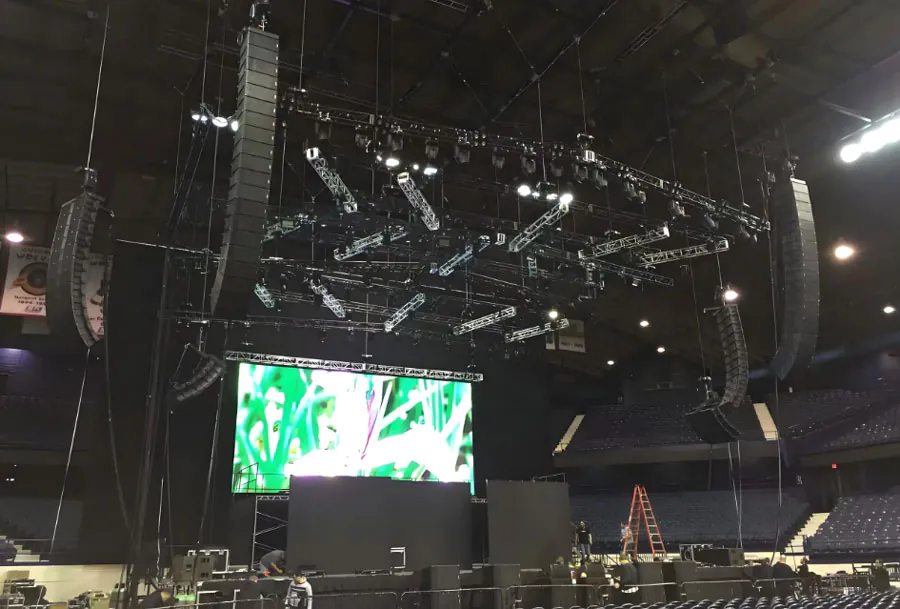
– Engineering and Rigging: Structural calculations and certified rigging hardware for flown installations. For ground stacks or floor-mounted walls, appropriate bases, ballast, and safety brackets are required.
– Power and Data Management: Load calculations, distribution plans, surge protection, and backup power options. Reliable networked data cabling and signal routing for control and content.
– Content Integration and Playback: On-site video servers, media players, and show control integration with DJs, AV mixers, or event control systems. Providers should be able to accept a wide range of codecs and file formats, and offer encoding/transcoding services if necessary.
– On-Site Technicians and Ongoing Support: Experienced technicians for installation, calibration, and real-time troubleshooting during the event. Often this includes spare modules, power supplies, and signal cables to replace faulty parts quickly.
– Post-Event De-rigging and Transport: Efficient, safe teardown and removal, including cleaning and minor repairs.
A strong rental provider will also carry vendor insurance and offer clear liability terms, as rigging and high-power equipment carry risk.
Logistics: Timing, Transport, and Site Coordination
Logistics can make or break an installation. Plan lead times carefully:
– Booking Window: High-quality indoor LED screens are in demand. Book 4–12 weeks ahead for major events; for smaller needs, 2–4 weeks may suffice.
– Load-in & Load-out Windows: Coordinate with venue load-in schedules. Allow extra time for rigging inspections and power checks.
– Staffing Schedule: Ensure technicians are scheduled for full-duration checks—pre-event, showtime, and post-show.
– Shipping and Handling: Panels arrive in road cases. Confirm transfer equipment (forklifts, dollies), loading dock access, and storage areas.
Providers should supply a detailed run-of-show schedule and a single point of contact for coordination.
Content Optimization and Calibration
Getting great results from an LED screen is as much about content as the hardware. Providers should assist with:
– File Preparation: Advice on native resolution, bitrate, codecs, color space (Rec.709 vs. Rec.2020), and safe areas for overlays.
– Pixel Mapping and Scaling: Verify how content scales to the panel layout; ensure seamless tiling across seams.
– Color Calibration and Gamma: Use calibration tools to match cabinets, ensuring consistent color and grayscale across the entire display.
– Brightness and Contrast Adjustments: Tune levels to the venue lighting for best perceived contrast without clipping highlights.
– Test Loops and Rehearsals: Schedule test runs to catch playback issues, synchronization problems, or unexpected aliasing.
For live events, add latency considerations and synchronization with live cameras. NDI and SDI workflows are common; providers should be fluent in both.
Maintenance, Redundancy, and Troubleshooting
A high-quality rental provider anticipates failures and designs redundancy:
– Spare Modules and Power Supplies: On-site spares reduce downtime to minutes instead of hours.
– Redundant Signal Paths: Dual fiber or SDI feeds, with automatic switchover when available.
– System Monitoring: Real-time monitoring can alert technicians to failing modules, temperature issues, or network errors.
– Quick Repair Protocols: Experienced crews and commonly stocked parts help restore service fast.
– Preventive Maintenance: Providers should describe maintenance practices before each event—cleaning fans and filters, checking connectors, and verifying firmware updates.
Ask about the provider’s SLAs for fixes and whether backup display options exist in case of catastrophic failure.
Cost Structure and Pricing Models
Pricing for indoor LED screen rental usually includes several components:
– Base Rental Fee: Typically quoted per square meter per day or per event. Finer pixel pitches cost more.
– Installation & Labor: One-time fees for rigging, assembly, calibration, and technical staff.
– Logistics: Transport, trucking, and handling fees depending on distance and access.

– Power & Infrastructure: Temporary power distribution or backup generators if required.
– Processing & Playback Equipment: Media servers, switchers, encoders, and control systems.
– Insurance and Permits: Some venues require additional insurance or local permits.
– Consumables and Misc: Cables, flight cases, spare parts usage.
Example pricing ranges vary wildly by market and region. Always request a detailed quote with line items and ask about overtime rates for technicians.
Selection Checklist: How to Choose a Provider
When evaluating rental companies, prioritize:
– Portfolio and References: Look for projects similar to yours—corporate events, concerts, retail installs.
– Technical Capabilities: Confirm pixel pitch, refresh rate, brightness, and processor compatibility.
– On-Site Support: Confirm technicians’ experience and whether lead technicians will be present for setup and showtime.
– Redundancy & Spares: Ensure spares and backup plans are documented in writing.
– Insurance & Compliance: Verify insurance certificates and compliance with local rigging and electrical codes.
– Contract Terms: Cancellation policies, damage responsibilities, and overtime rates should be transparent.
Ask for a site plan, mockup images, and a run-of-show alignment meeting before signing.
Case Studies: Typical Uses and Outcomes
– Corporate Product Launch: A company rented a P1.9 LED wall for a product reveal in a 600-person auditorium. The rental included pre-event calibration, HD playback with real-time camera feeds, and an on-site technician. The outcome: crisp product detail shots and seamless live video with no flicker on cameras.
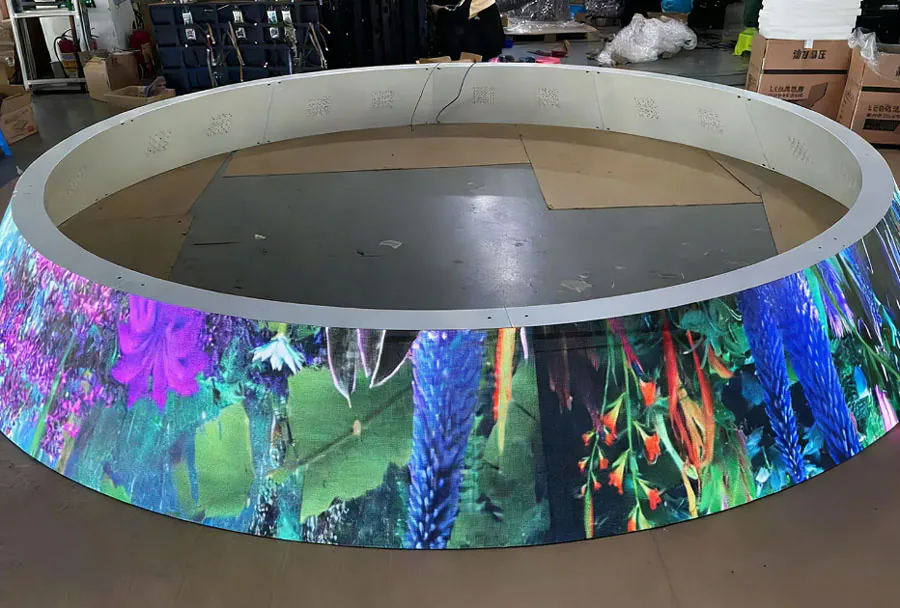
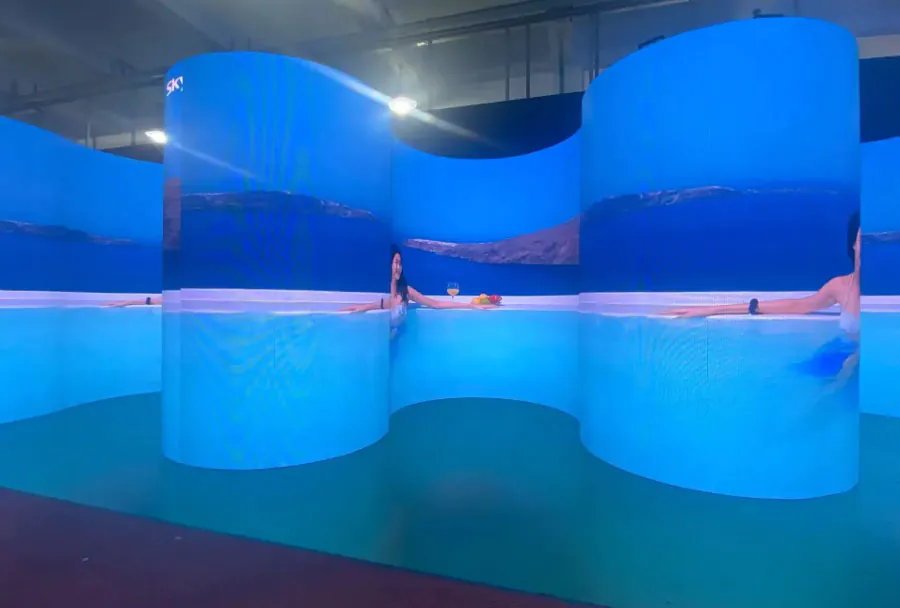
– Retail Activation: A luxury brand used a curved P2.5 LED wall in a storefront. Installation support included a glass-safe mounting system and controlled brightness to avoid reflections. Result: increased foot traffic and social media engagement.
– Conference Keynote: An annual trade show used a large P2.6 LED screen with dual redundant media servers and live speaker slides. The rental vendor provided a rehearsal window to sync slides and videos, avoiding the typical last-minute playback errors.
Each case highlights how installation support and content preparation are as important as selecting the right panel.
Return on Investment and Measurement
Evaluating ROI for a rental led screen involves both quantitative and qualitative metrics:
– Ticket sales or attendance lift attributed to the improved experience.
– Engagement metrics: dwell time in retail, inquiries at trade show booths, or social media posts featuring the display.
– Media quality for recordings or live streams—higher production value can link directly to brand perception.
– Cost savings against purchasing and maintaining owned equipment, especially for irregular use.
Measure success by setting goals (e.g., increased dwell time, X social interactions, successful streams) and tracking against them post-event.
Common Pitfalls and How to Avoid Them
Avoid these frequent missteps:
– Under-sizing the screen for the venue or overestimating viewing distance—leads to pixelated visuals or wasted budget.
– Ignoring refresh rate needs—causes flicker on camera feeds.
– Failing to plan for power and load-in restrictions—results in last-minute workarounds and delays.
– Skipping rehearsals—technical issues often surface only under show conditions.
– Picking the cheapest provider—low-cost options may skimp on spares, training, or certified rigging.
Mitigation: hire a reputable provider with clearly documented processes, reserves, and references.
Maximizing Impact with Professional Rentals
High quality indoor LED screen rental with professional installation support delivers outstanding visual experiences without the capital commitment of ownership. The right rental partner provides more than panels—they bring engineering expertise, logistical coordination, content optimization, and on-site backups that make the difference between a good show and a great one. When selecting a provider, prioritize technical specs matched to your audience distance, confirm robust installation and redundancy practices, and demand transparent pricing and clear SLAs. With the right planning and experienced support, an indoor LED screen rental can elevate branding, engage audiences, and deliver measurable returns on your event investment.